History in Photos: UF College of the Arts
Slideshow and timeline photos are sourced from the UF Libraries Digital Collections unless noted otherwise.

The College of Fine Arts was established in 1975 when the College of Architecture and Fine Arts split into two distinct colleges.
Prior to our designation as a standalone college, the College of the Arts traces our history at University of Florida to UF’s earliest years, starting with the formation of the Men’s Glee Club in 1907; followed by the Symphony Orchestra in 1911 and the Gator Marching Band in 1913.
The first painting and drawing courses leading to Bachelor of Fine Arts degrees launched at UF in 1929, and in the same year, Professor H.P. Constans started the university’s first official theatre club, the Florida Dramatic Society, which dissolved then re-formed as the Florida Players in 1931. The music program took root in 1927 and became the Division of Music in 1948.
These areas—art, design and art history; music and theatre—became the three foundational departments of the College of Fine Arts when we split off from Architecture in 1975.
Today, the School of Art and Art History, School of Music, and School of Theatre and Dance are joined by the Center for Arts in Medicine, the Center for Arts, Migration, and Entrepreneurship, and the Digital Worlds Institute under the COTA umbrella.
College of the Arts Timeline
1910 – 1920
1907: Men’s Glee Club founded.
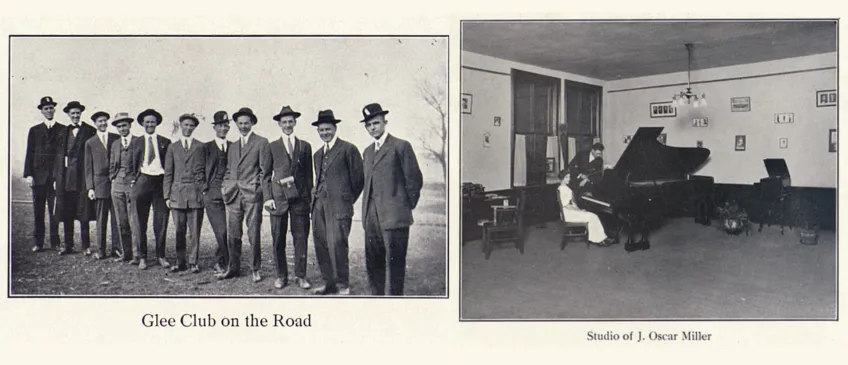
Men’s Glee Club director J. Oscar Miller performed with the club as violinist and baritone soloist. His instructional activities in the “Special Department” of Music are detailed in the 1913-1914 University Record.
Professor Miller’s sister, Ella, played piano accompaniment for the Glee Club in Gainesville and in their tours around the state of Florida starting in 1913.
1911: Symphony Orchestra founded.
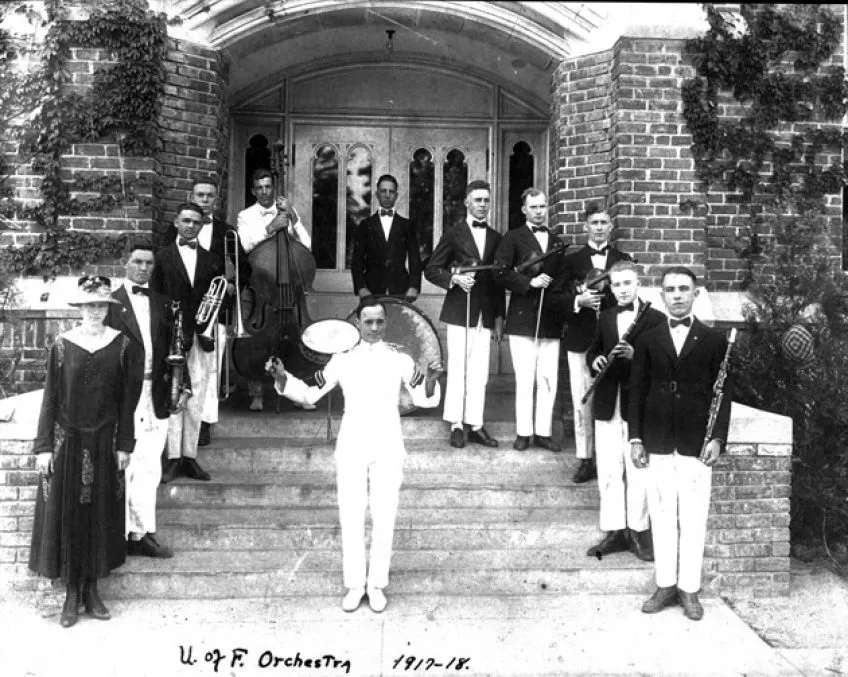
A mandolin club and saxophone quartet also appear in university yearbooks prior to 1920 under the directorship of Professor Miller and A.R. Marks.
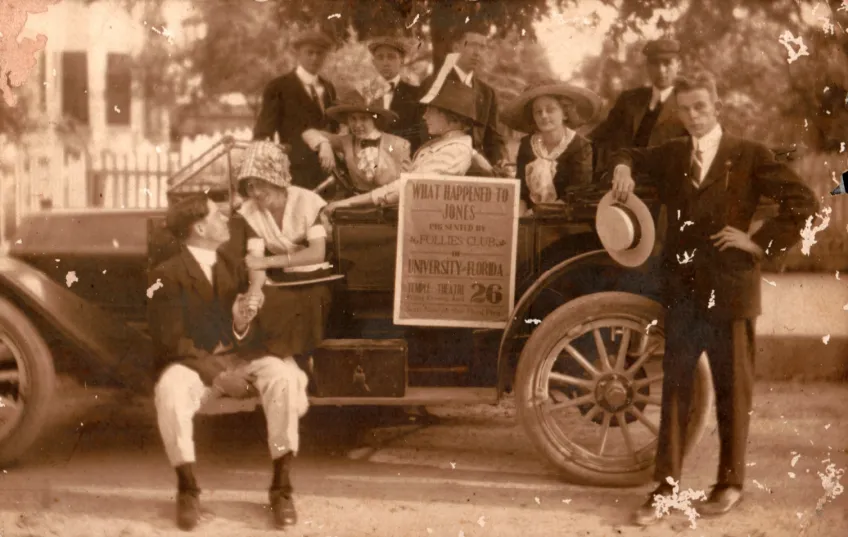
1912: First documented of theatre groups emerge.
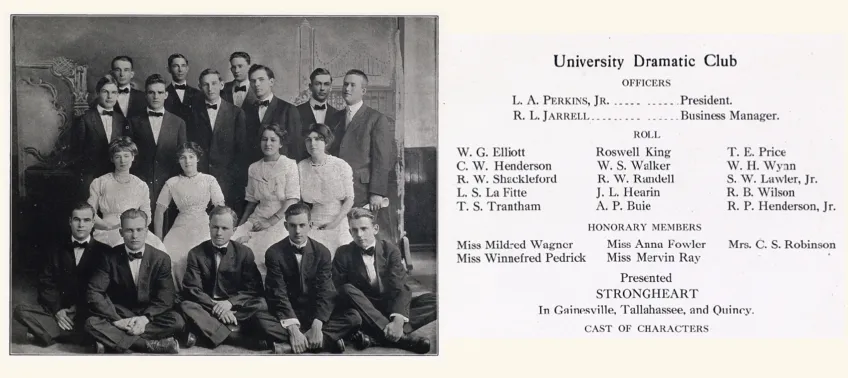
Unofficial theatre clubs such as the University Dramatic Society and the Follies appear in the UF yearbook as early as 1912. Women were not admitted to the University of Florida until the institution became co-educational in 1947, but were recognized as honorary members of these early student-led dramatic clubs. It is likely that the UF’s all-male theatre groups collaborated with students in the Florida State College for Women (now Florida State University) in Tallahassee.
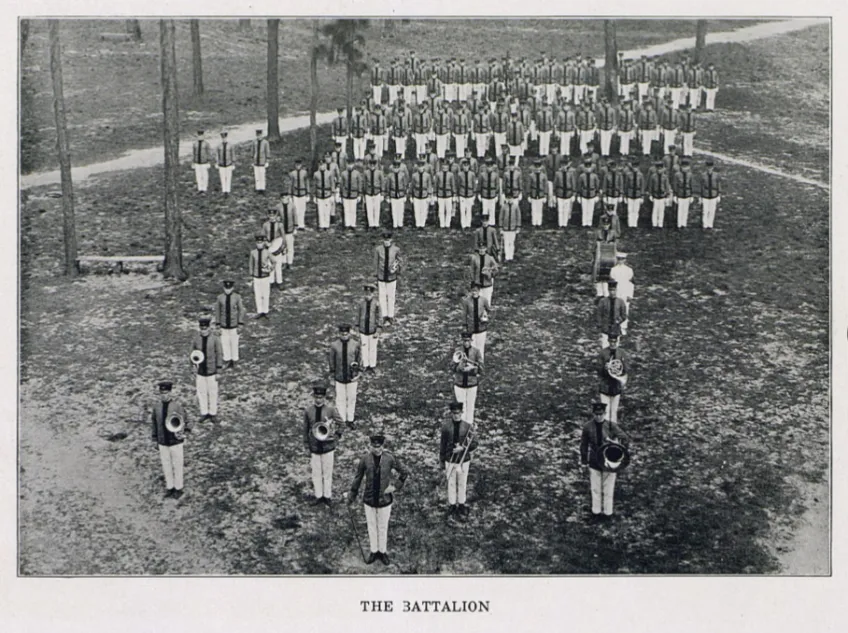
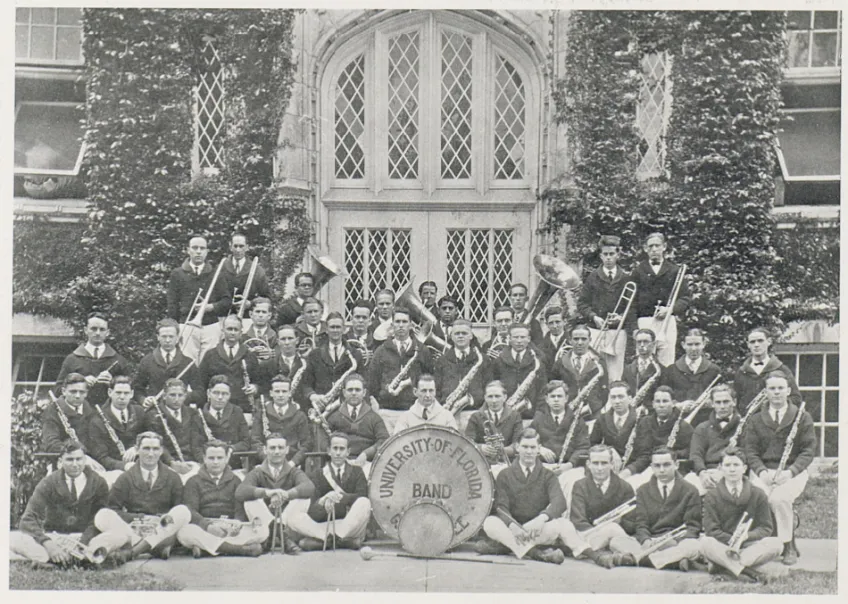
1913: Gator Marching Band founded as a cadet band.
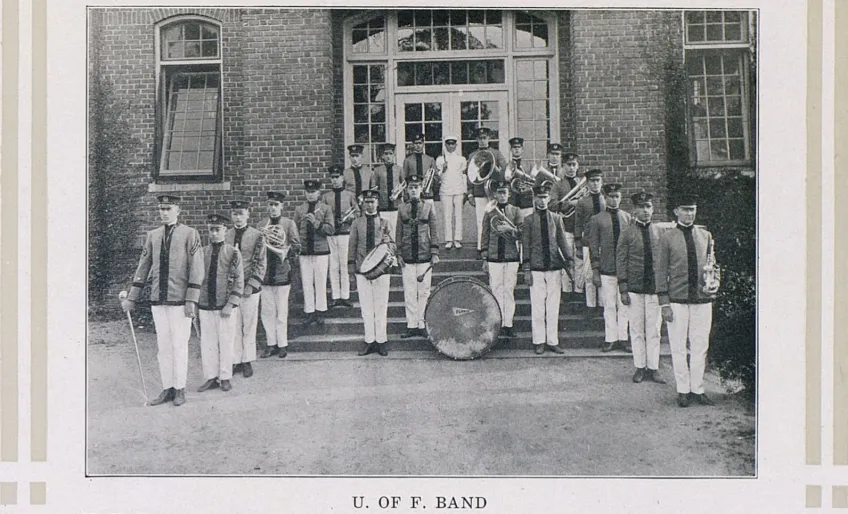
As a land grant institution and all-male university at its inception, the University of Florida fulfilled a condition set forth by the Morrill Act of 1862 to require military training as a curricular component for all students. The cadet band, which would later evolve to become the Fightin’ Gator Marching Band, also known as the The Pride of the Sunshine, was organized as an adjunct to the military department.
1918: The Original University Jazz band founded.
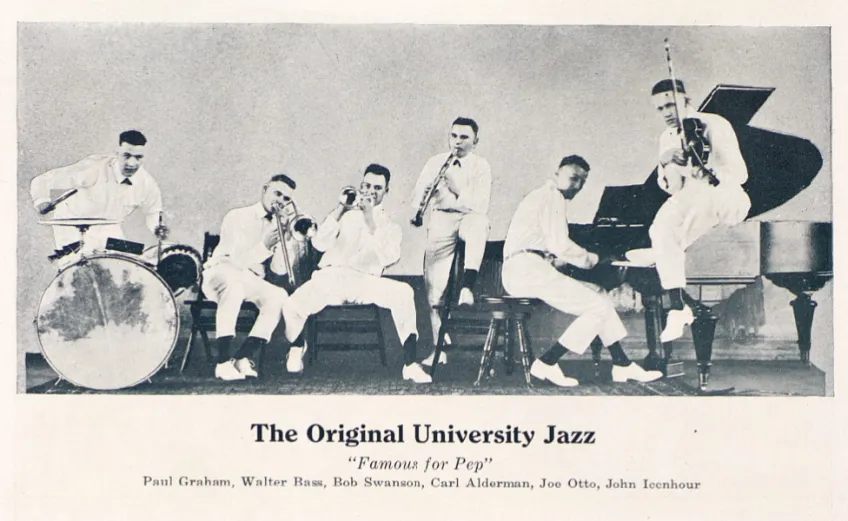
In a 1982 interview with University of Florida Samuel Proctor Oral History Project, John Icenhour recalled that “fraternities were crying for a dance band” as social activities resumed in the wake of the 1918 influenza pandemic. The Original University Jazz band “really took off,” Icenhour said, when trumpeter and UF Cadet Band member Bob Swanson joined the jazz ensemble following his return from service in France with the 124th Infantry Regiment Band in World War I.
1920 – 1930
1925: The University Auditorium Pipe Organ is installed.
Dr. Andrew Anderson, a St. Augustine physician, philanthropist and associate of early Florida developer Henry Flagler, provided the funds for a pipe organ to be installed in the newly constructed University Auditorium.
The Anderson Memorial Pipe Organ was first played publicly on June 7, 1925 at the annual University Commencement Convocation.
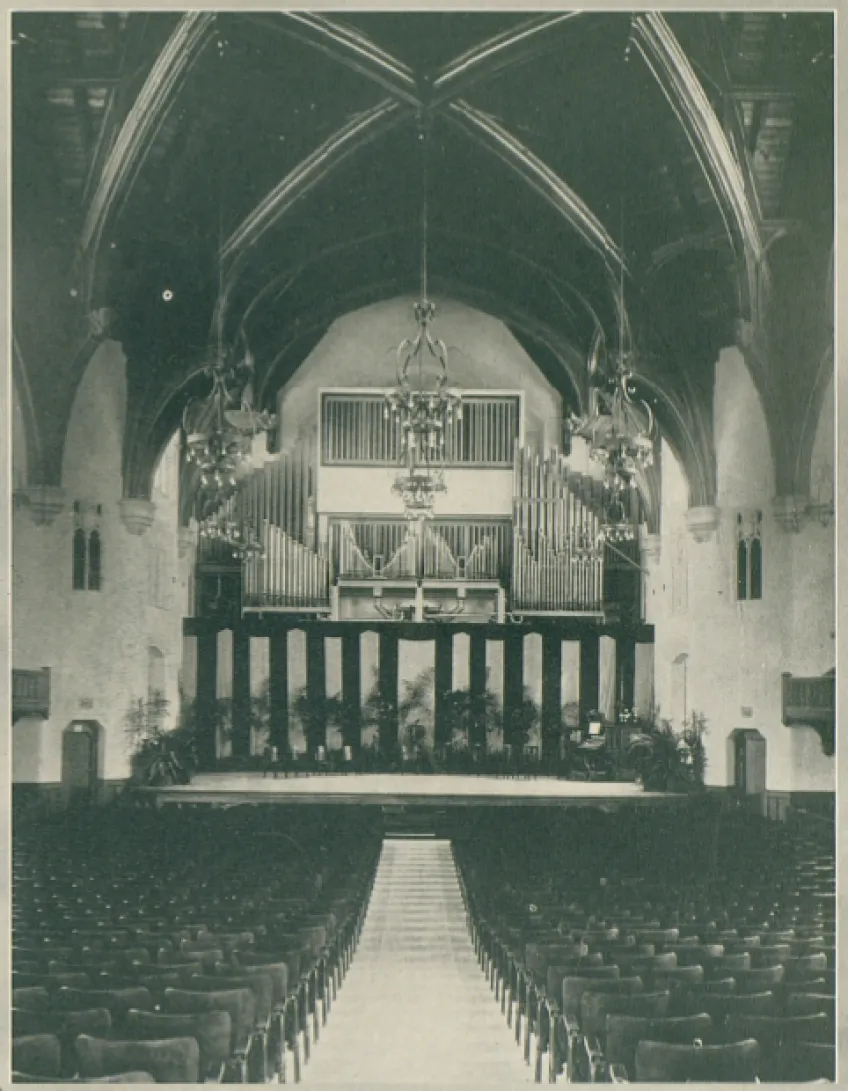
Claude L. Murphree (nephew of President Albert A. Murphree) was the University of Florida’s first organist and carillonneur. He was succeeded by School of Music Professor Emeritus, Willis Bodine, who served in the role from 1959-2003. Bodine’s successor, Professor Laura Ellis, is the university’s current pipe organist and carillonneur.
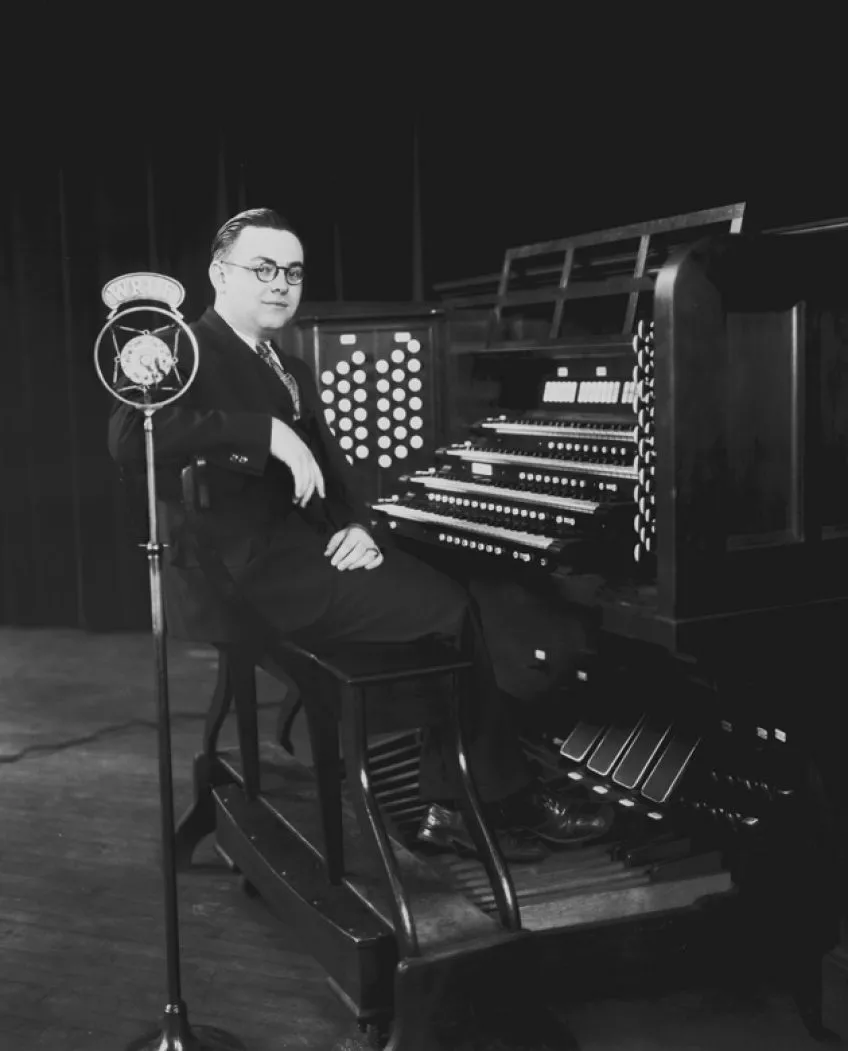
Click here to hear a recording of Murphree playing the pipe organ circa 1957.
1927: Official music program founded.
Program director R. DeWitt Brown coordinated the performance activities of the Symphony Orchestra, Gator Band and the Men’s Glee Club.
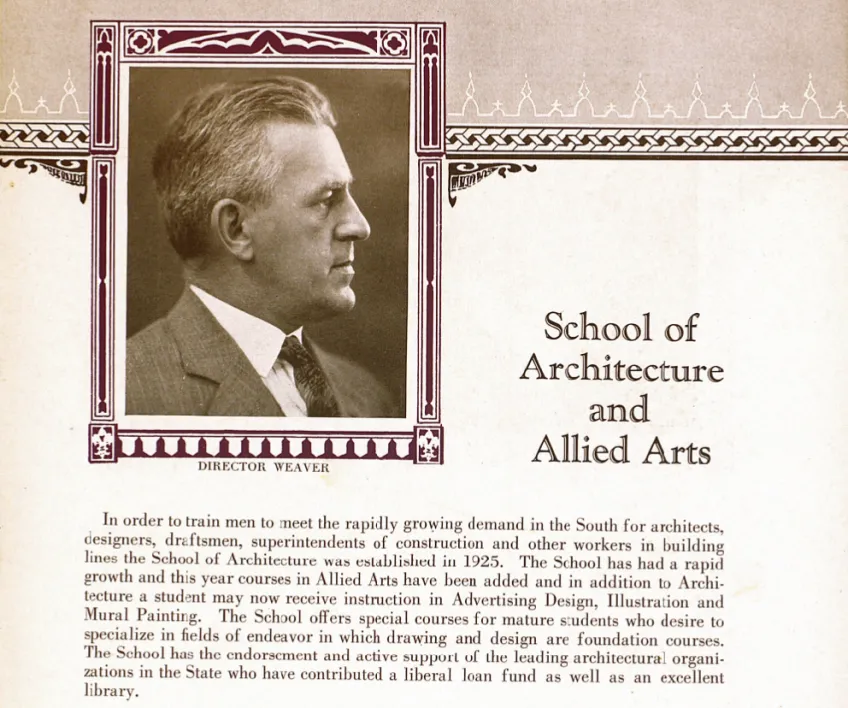
1929: The School of Architecture (founded in 1925) establishes a painting and drawing program.
With the introduction of courses in painting, drawing and design, the School of Architecture formally updated its name to the School of Architecture and Allied Arts. This is the first curriculum that will lead to a Bachelor of Fine Arts degree from the University of Florida.
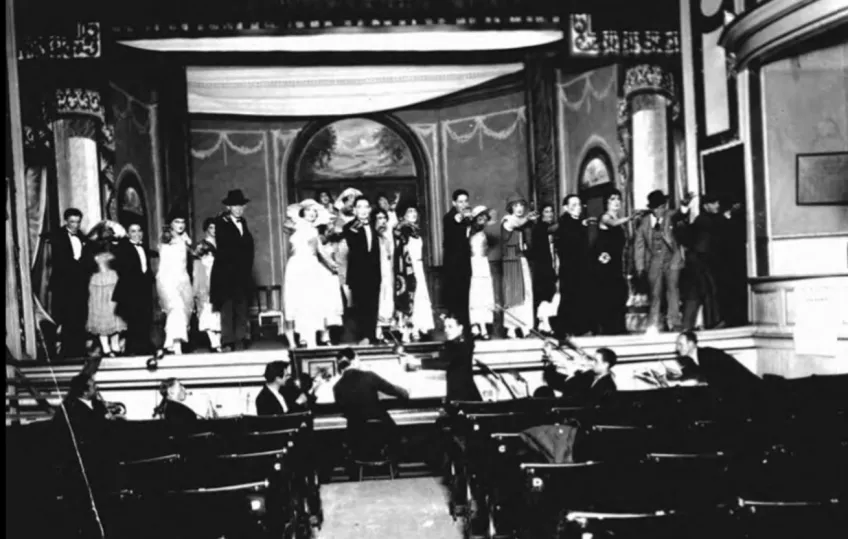
1929: Official theatre program founded.
UF’s theatre program traces its formal roots to the formation of the University of Florida Dramatic Society, under the direction of Professor H. P. Constans, with the production of three one-act plays in University Auditorium.
1930 – 1940
1931: The Florida Dramatic Society dissolves and a new organization, the Florida Players, is formed.
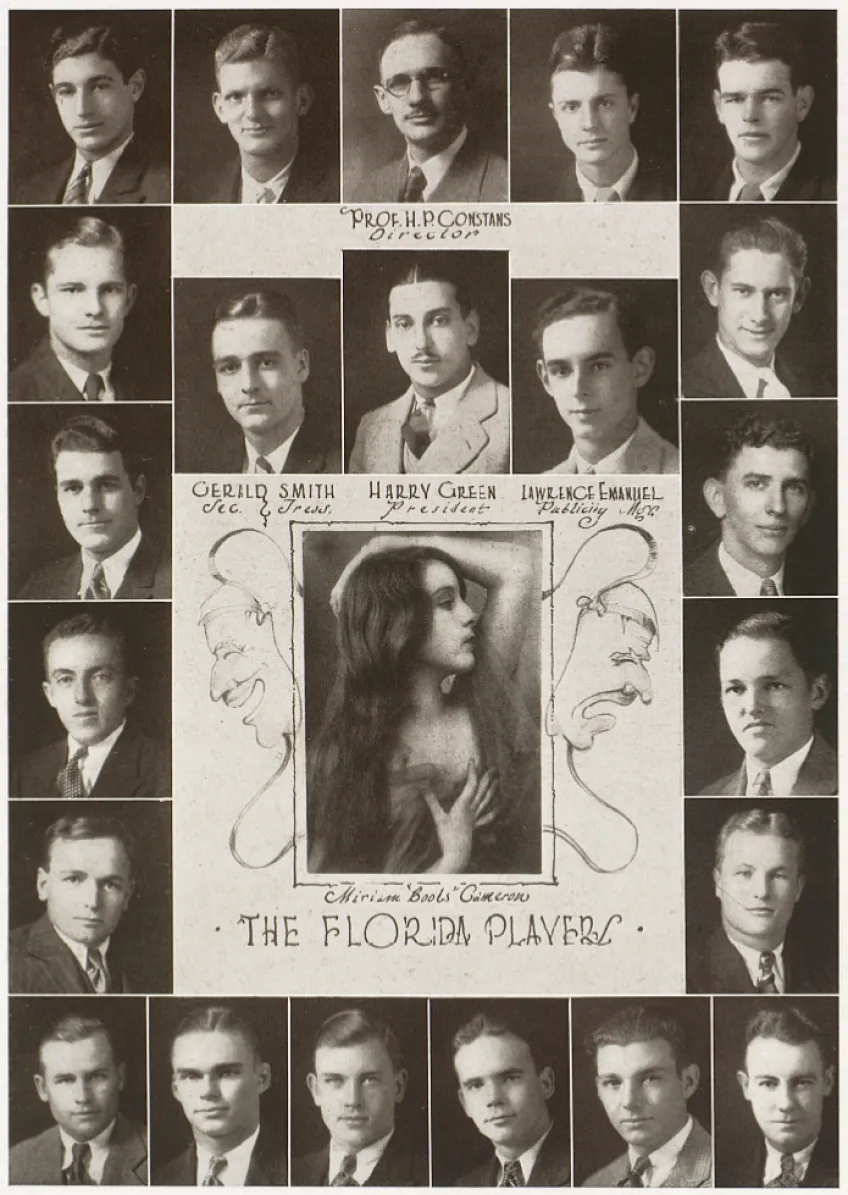
Nearly a century after their inception, the Florida Players remain active to this day as a student-run theatre company sponsored by the UF Student Government.
1932: The Bachelor of Commercial Art degree is added to the School of Architecture and Fine Arts.
1940 – 1950
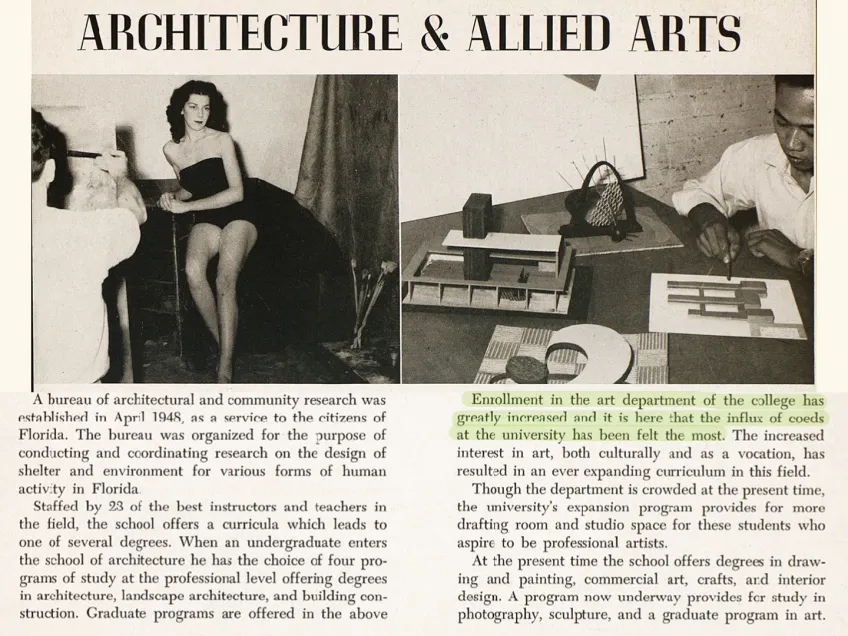
1947: The University of Florida becomes co-educational.
1947: The UF Theatre Program is established in the Department of Speech.
Theatre courses offered within the Department of Speech included instruction in acting, directing, designing, costuming, construction, lighting, playwriting and theatrical history.
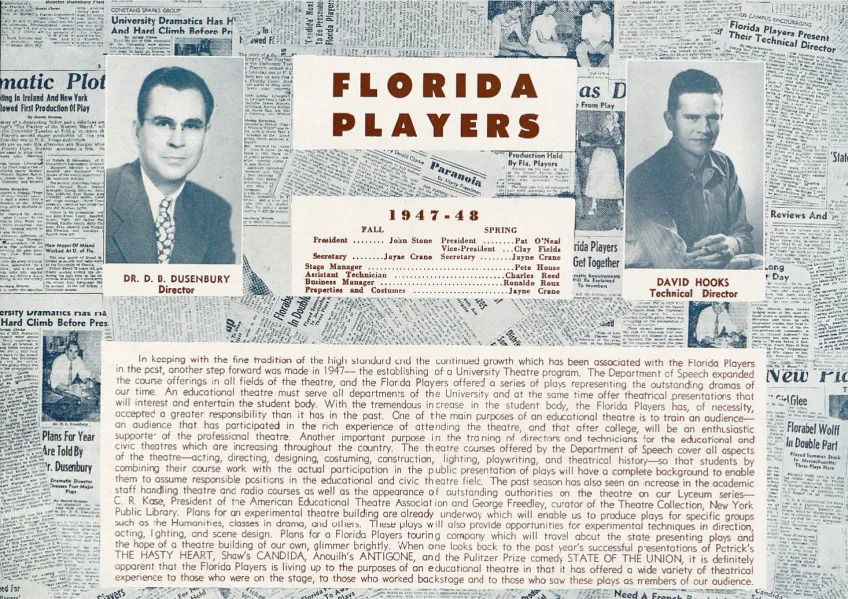
Click here to view a zoomable version of the 1947-1948 Florida Players yearbook page.
1948: Division of Music organized.
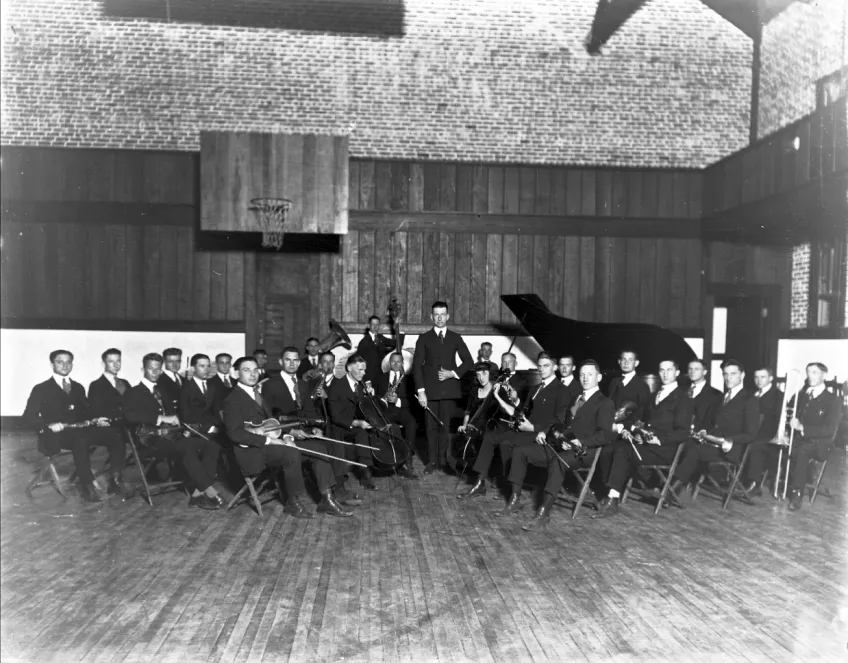
During the college’s early years, the departments of music and art were housed in unusual spaces. The music department was housed in an pre-war wooden basketball gym, as seen in the orchestra photo above. Architecture and fine arts students utilized World War II-era wooden army barracks that were converted into classrooms.
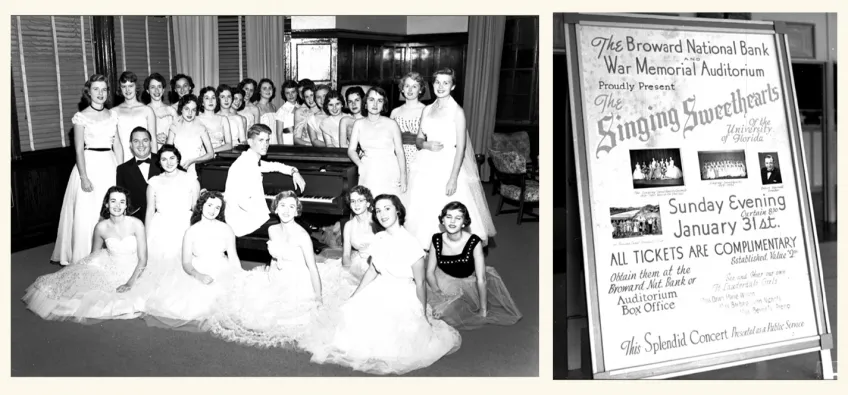
1948: Women’s Glee Club forms.
The Women’s Glee Club, known as the “Singing Sweethearts,” formed shortly after the University of Florida became a co-educational institution in 1947.
1949: The School of Architecture and Allied Arts is upgraded to become the College of Architecture and Allied Arts.
1950 – 1960
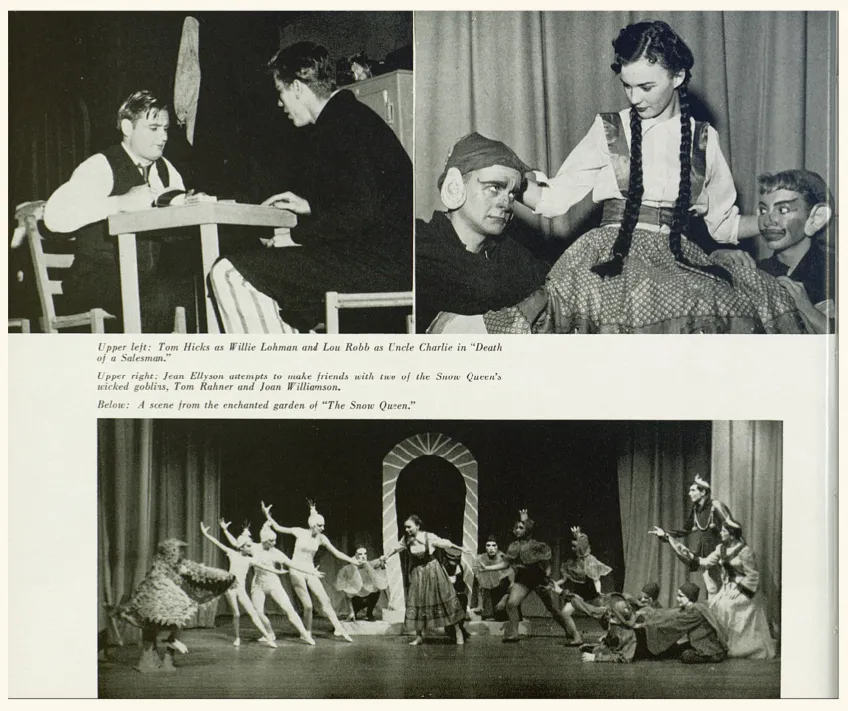
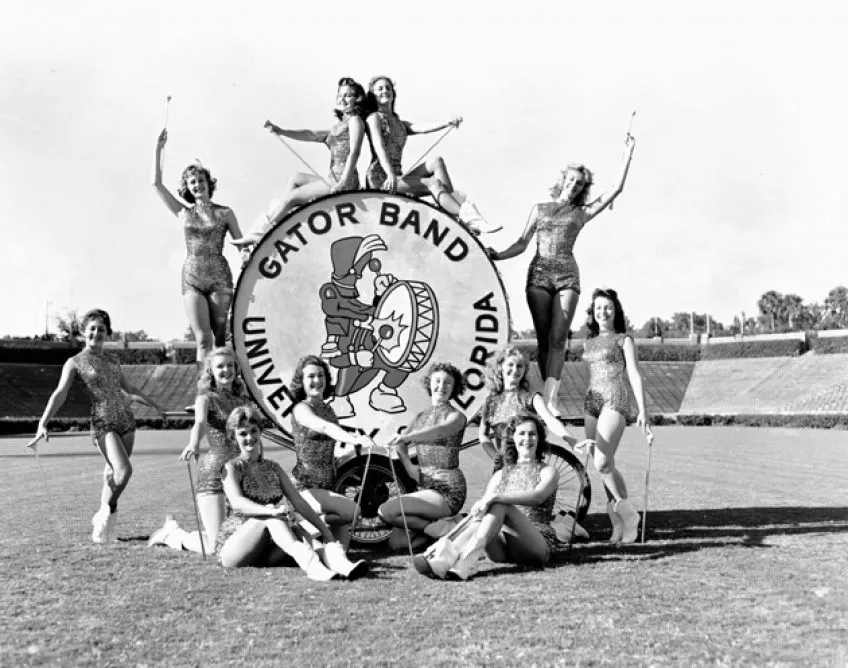
1953: The “Big Boom” bass drum is created for the Gator Marching Band by the WLF Drum Company of Chicago.
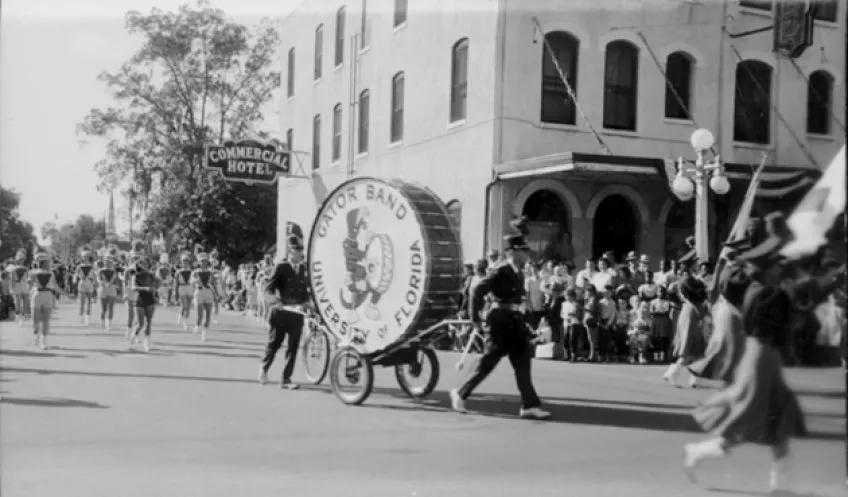
One of largest bass drums in the Southeast, Big Boom measures six feet in diameter stands over eight feet tall on its carriage.
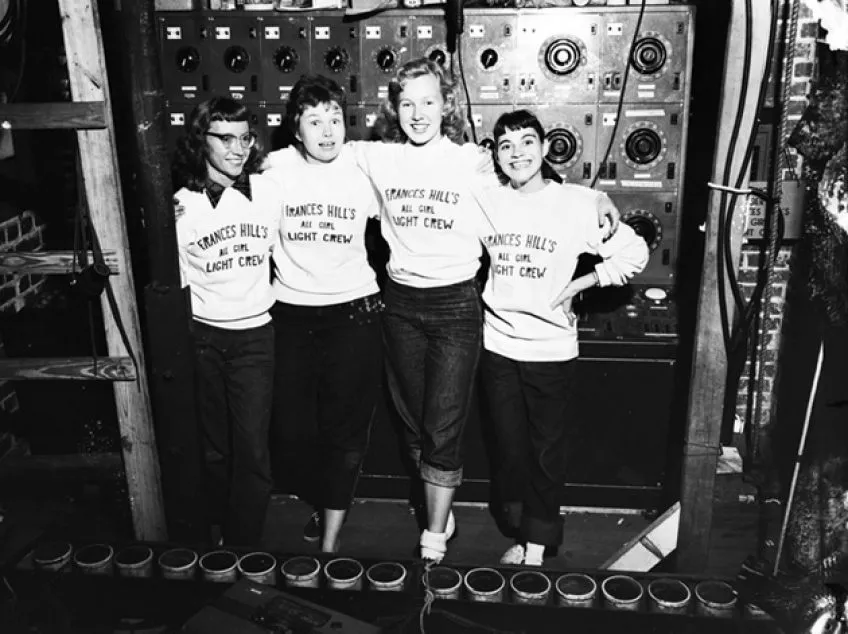
1956: The College of Architecture and Fine Arts is created through a reorganization of the College of Architecture and Allied Arts.
The reorganization formally splits the college into the Building Arts division and the Fine Arts division. The Fine Arts division at this time includes the Department of Art and the Department of Music.
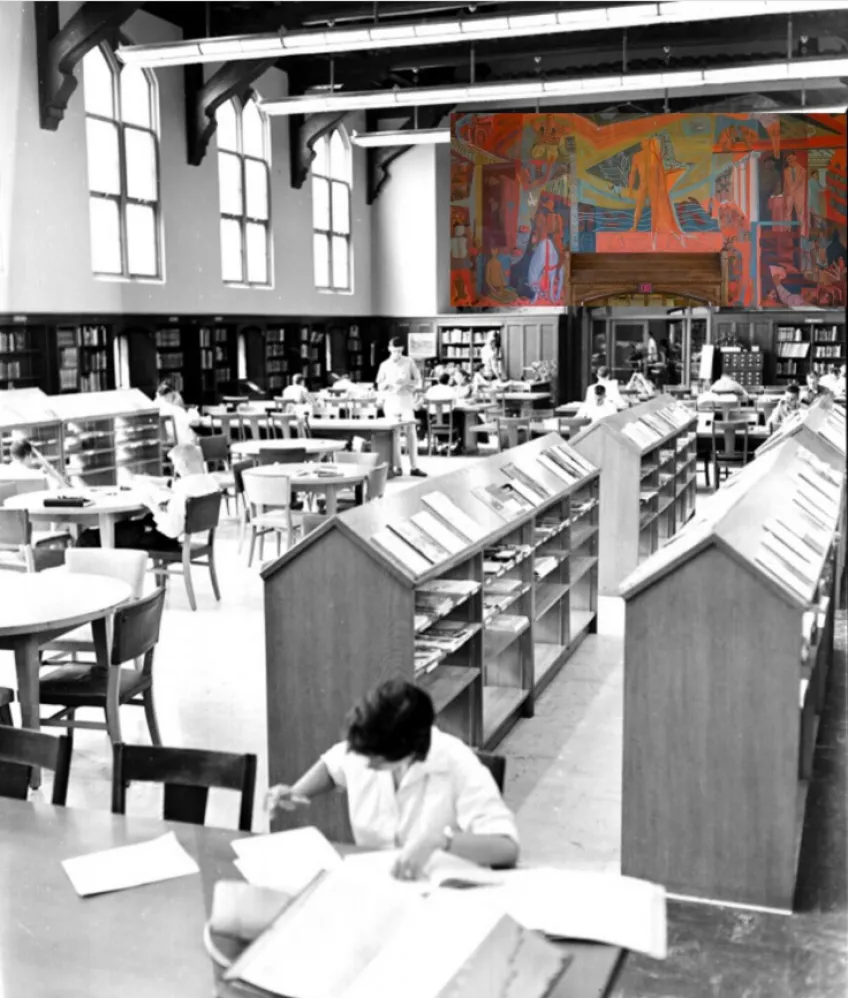
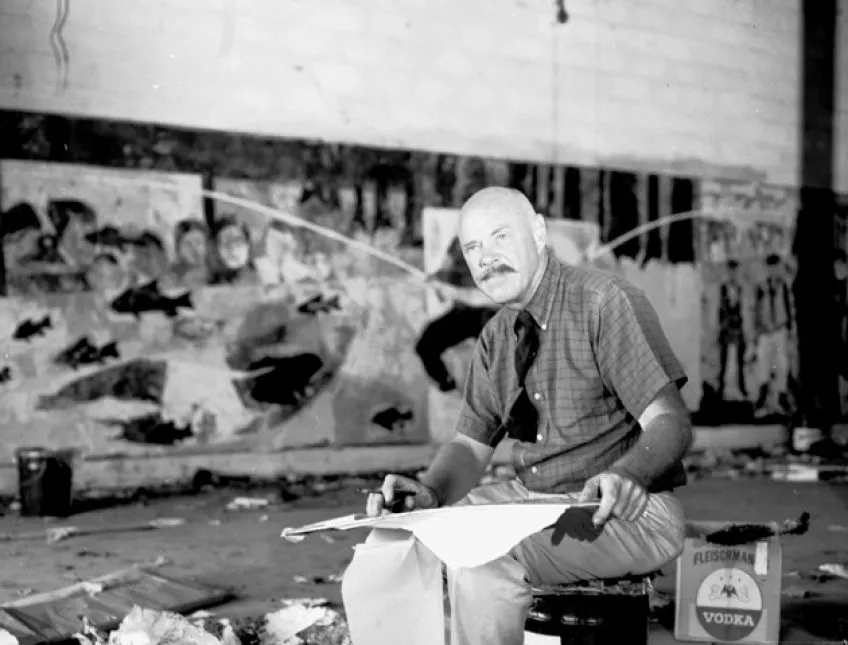
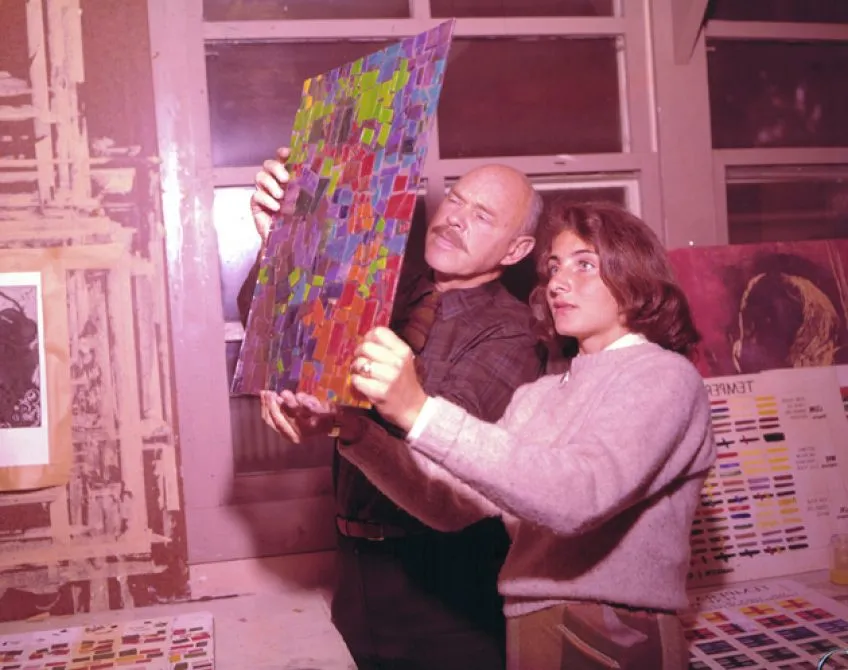
Click here to learn about the mural restoration in 2015 and to view vintage video footage of Holbrook at work.
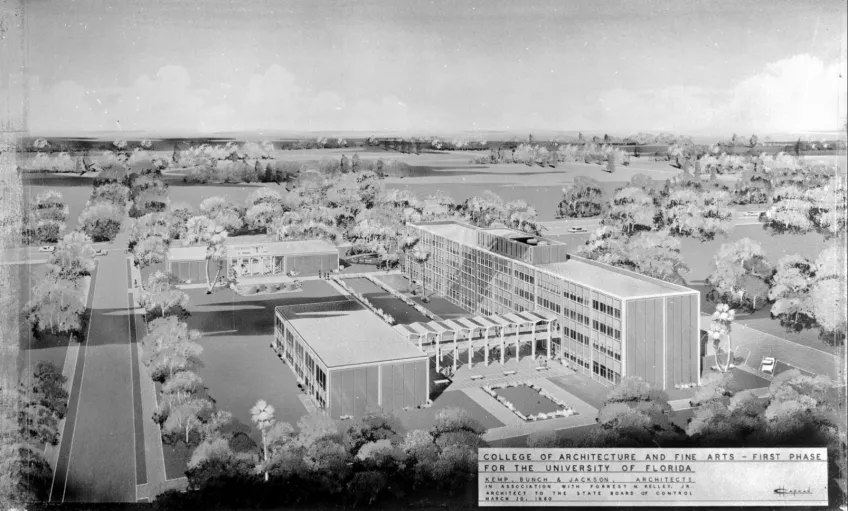
1957: Planning begins for a permanent building for the College of Architecture and Fine Arts.
The Florida Legislature appropriated funds to design the complex in 1957. Funding for construction became available in 1963 and construction began in 1964.
1960 – 1970
1965: Architecture and Fine Arts Complex opens.
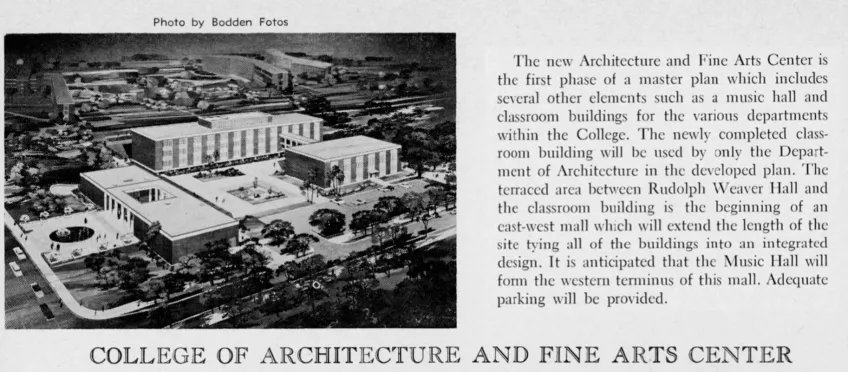
View additional photos and info in the February 1966 edition of Florida Architect magazine.
1965: University Gallery opens.
The gallery’s founding director, art historian and associate professor Roy Craven, served in the role for over 25 years and remained an instrumental figure in the arts community until his death in 1996.
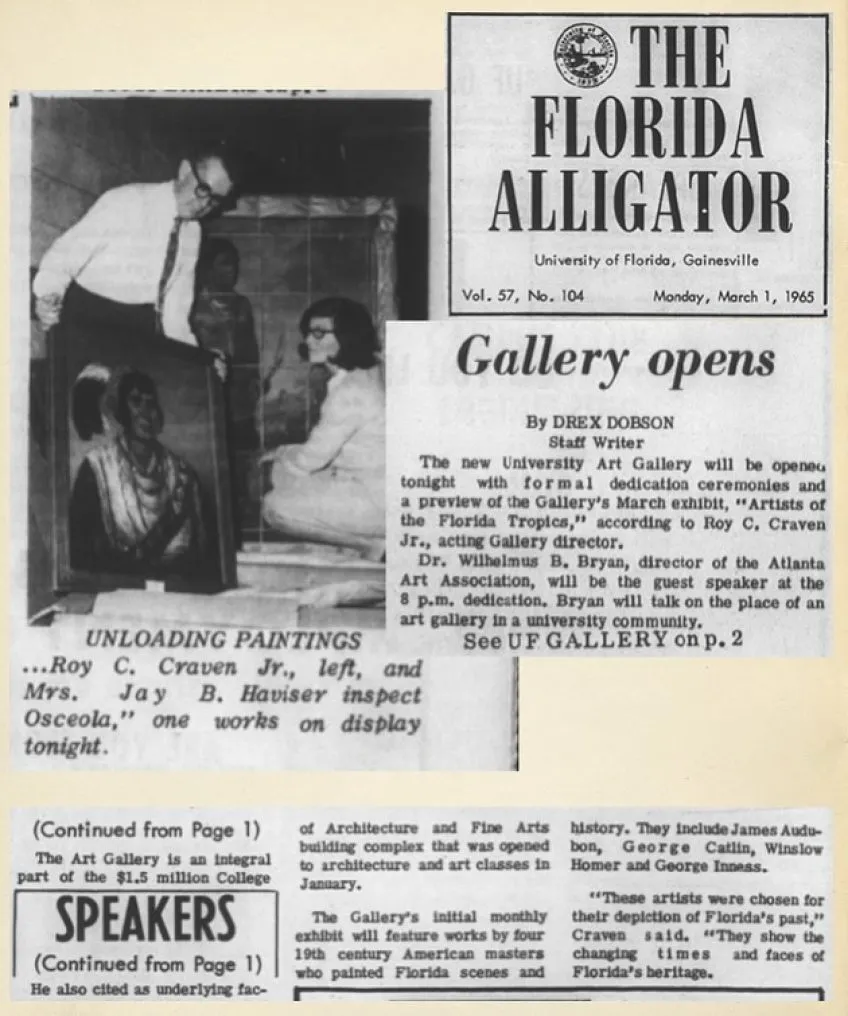
Click here to view the “Artists of the Florida Tropics” inaugural exhibition catalog.
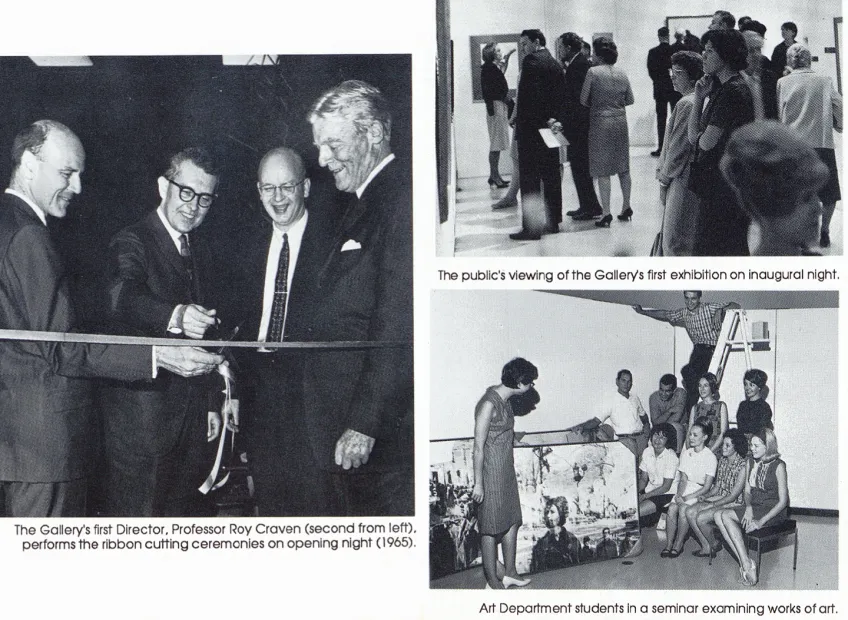
Click here to read Craven’s history of the UF Art Department and University Gallery.
1967: Constans Theatre opens with a production of Shakespeare’s “Twelfth Night.”
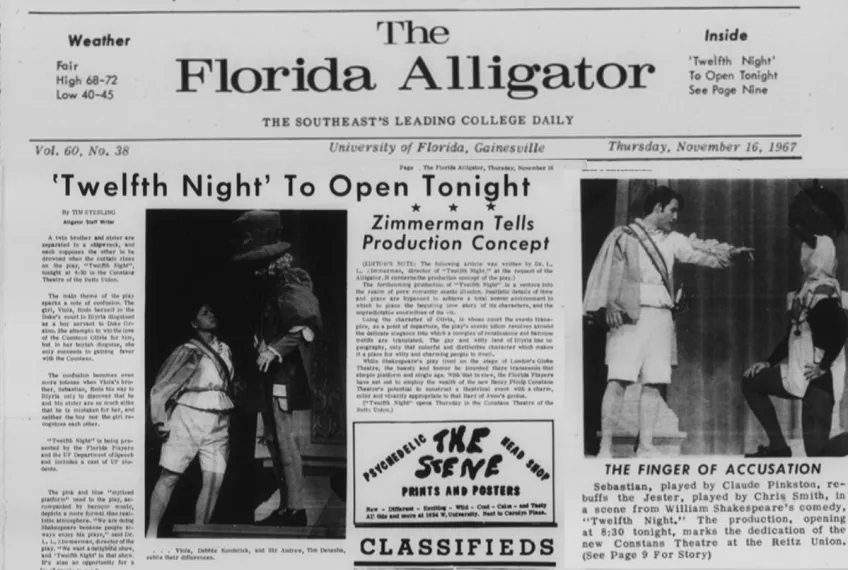
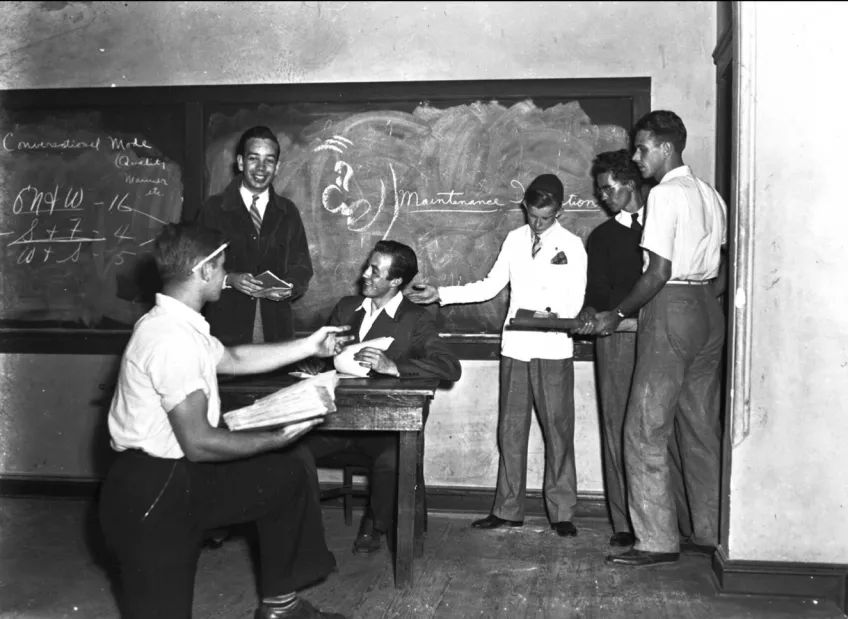
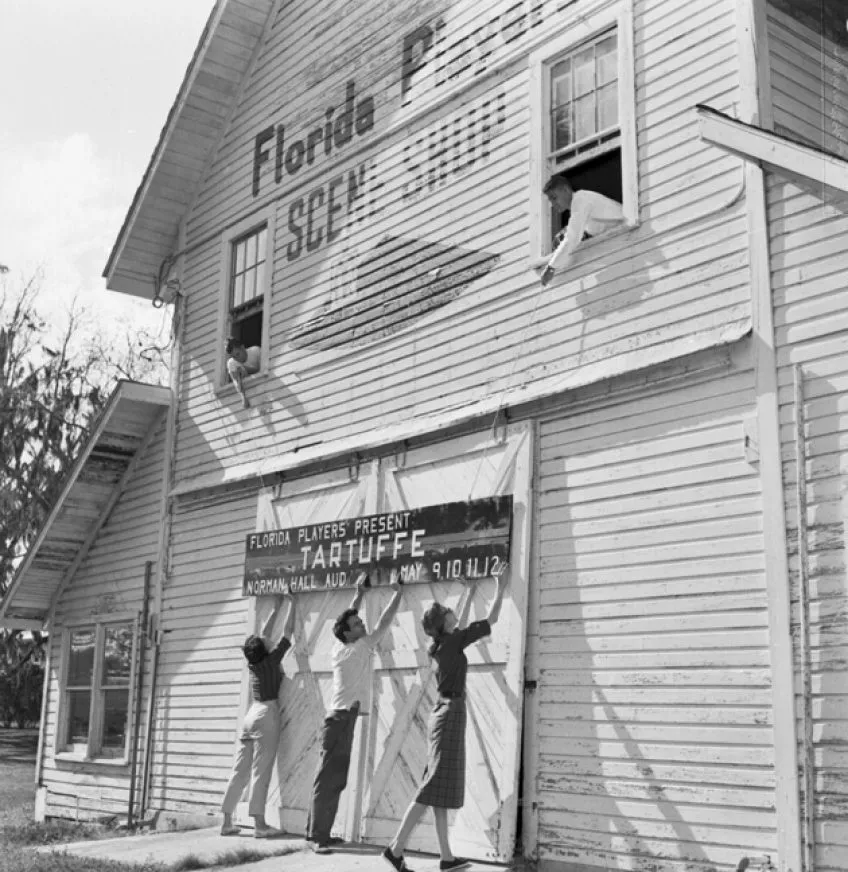
Prior to the construction of the Constans Theatre, the Players’ design, rehearsal and performance facilities were scattered across campus: table reads in Tigert and Norman Hall classrooms, costume designers tucked away in a University Auditorium back room and props production in an old wooden dairy barn located near the site that would later become the Architecture and Fine Arts Complex.
Florida Players Scene Shop, 1930s – 1967:
Constans Theatre in the early 1970s. What a glow-up!
1970 – 1980
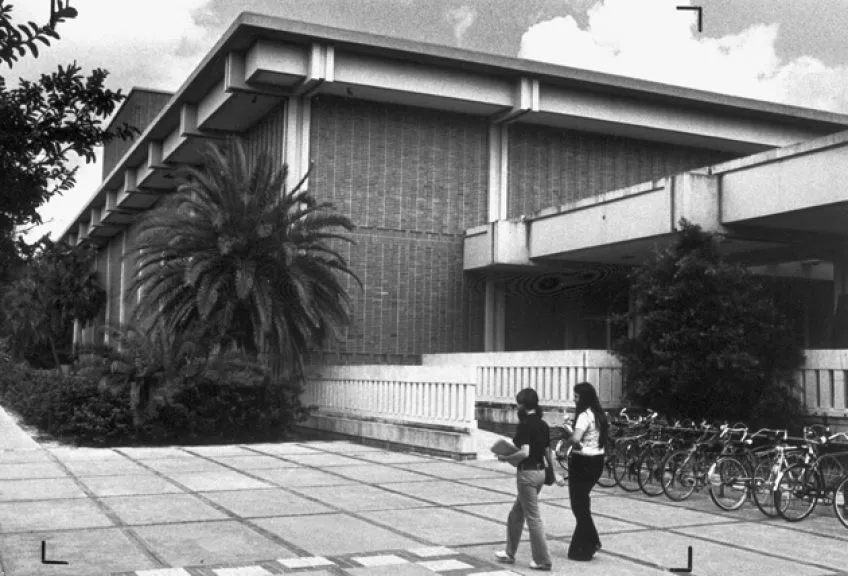
1970: Music Building construction begins.
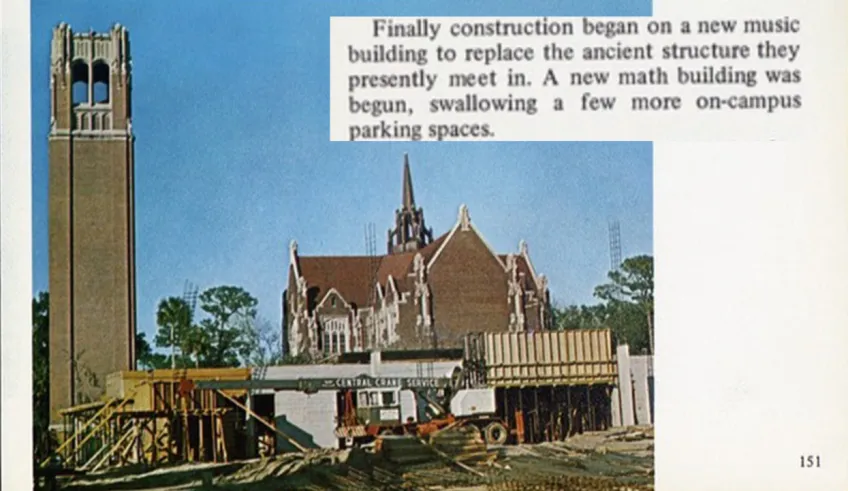
1971: First classes held in the Music Building.
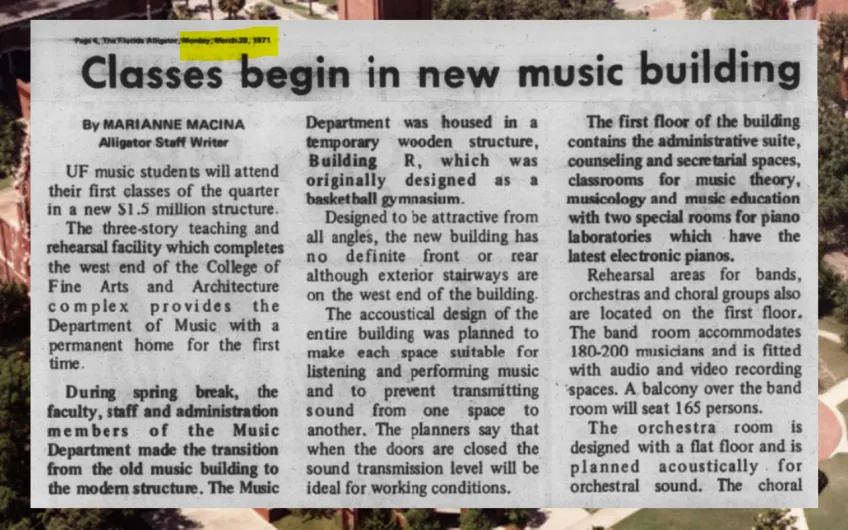
Click here to Read the full article: “Classes begin in new music building” (March 29, 1971).
1972: Music Building dedicated with a festival featuring American composer Aaron Copland.
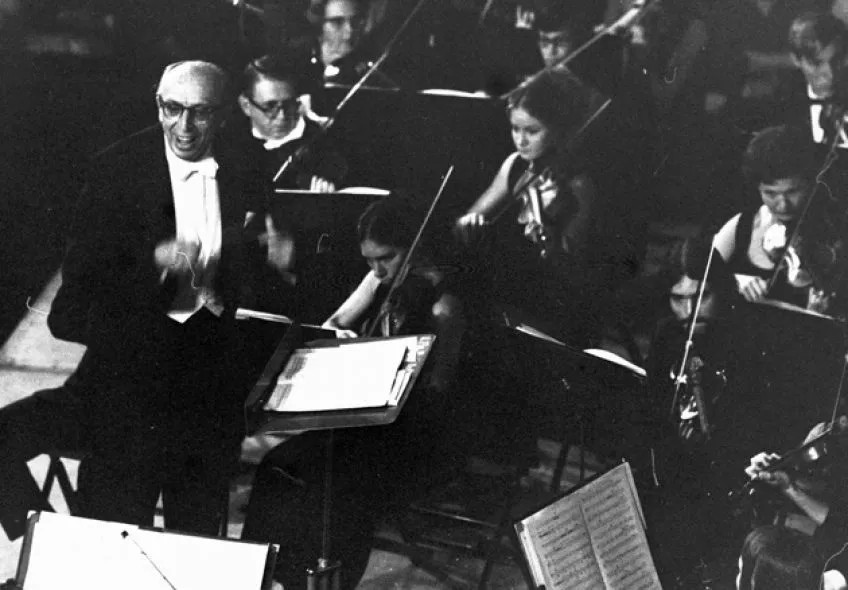
Read about the Music Building dedication in the Florida Alligator, March 6, 1972 edition.
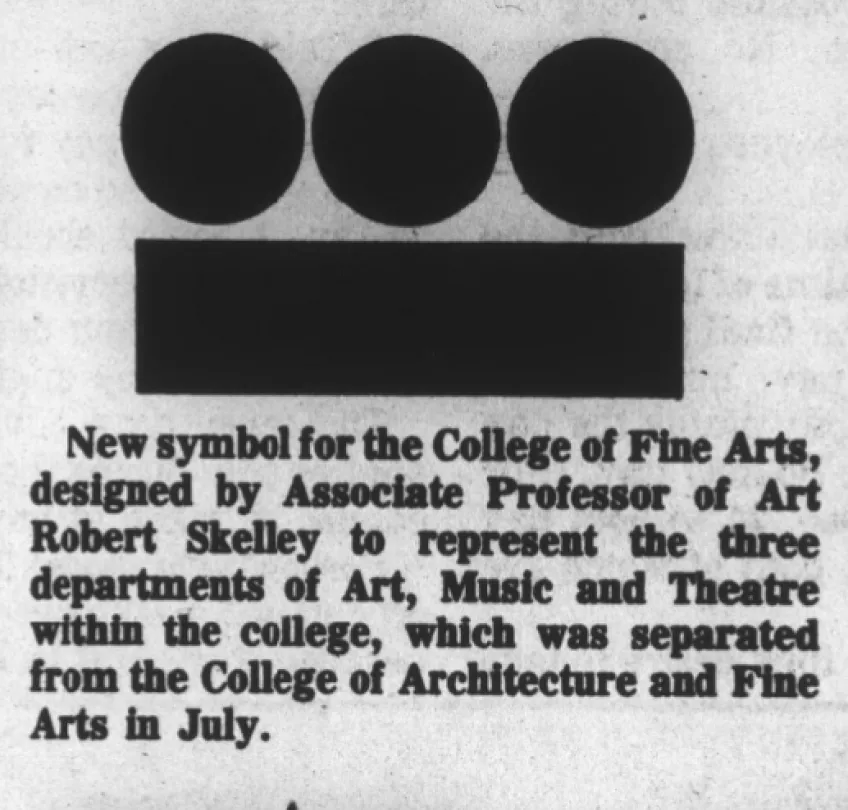
1975: College of Fine Arts established when the College of Architecture and Fine Arts splits into two distinct colleges.
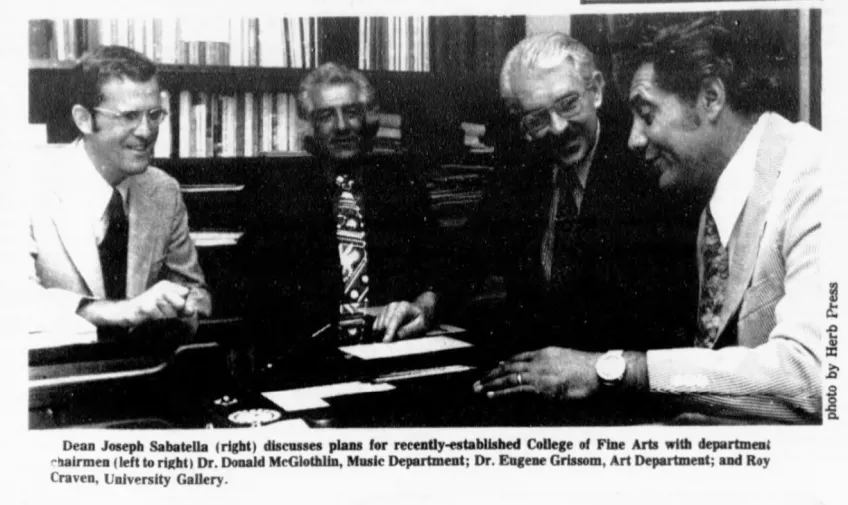
Read the article, New Dean Joe Sabatella Looks at Fine Arts Future, in the July 8, 1975 edition of the Florida Alligator.
1975: Department of Theatre is created in the College of Fine Arts.
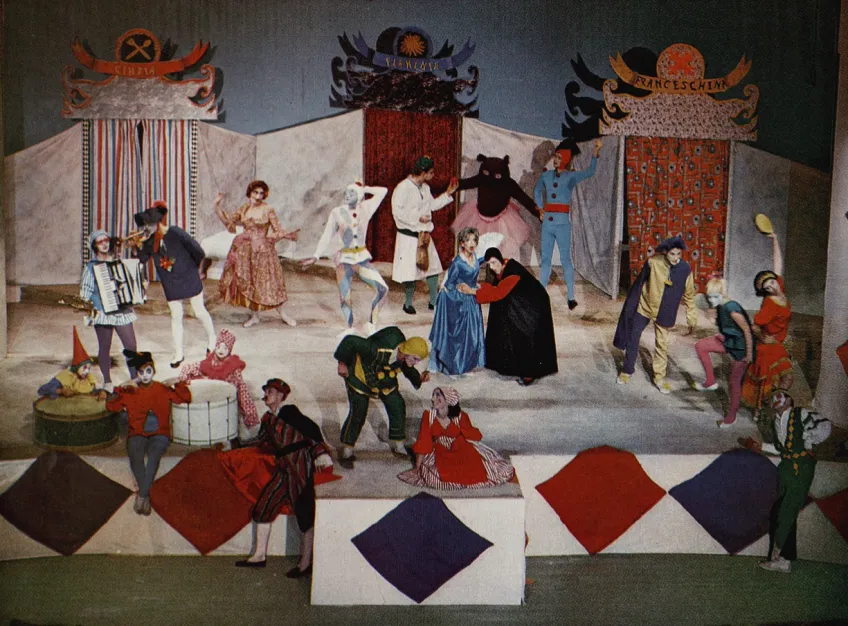
With the formal establishment of the Theatre Department in 1975, the three departments of Art, Music and Theatre became the cornerstones of the College of Fine Arts.
1979: Century Tower carillon dedicated.
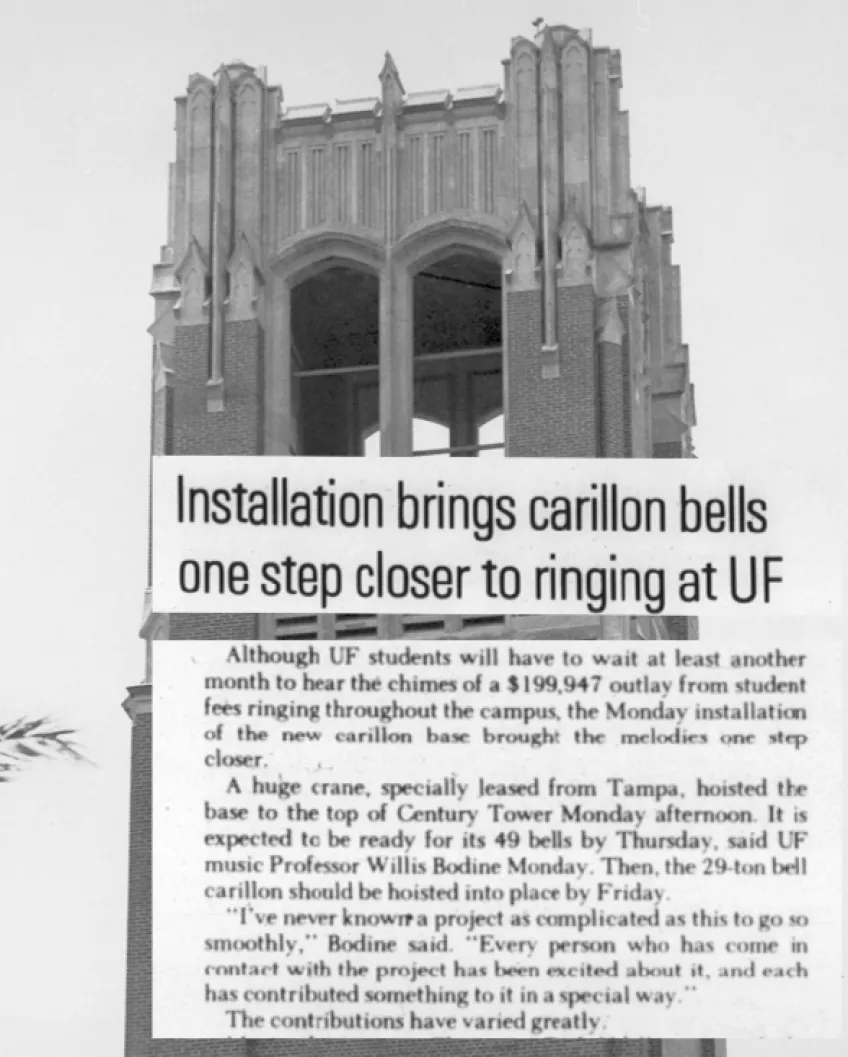
Click here to read the full article.
1980s – 1990s
1983: A $6M Capital campaign is launched to build The Harn Museum of Art.
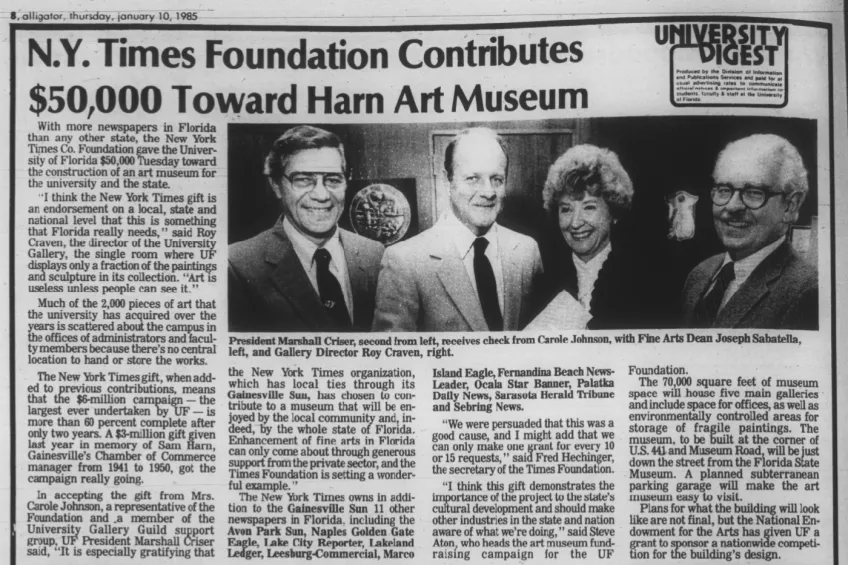
Click here for a zoomable version of the full article.
1990: Harn Museum of Art opens.
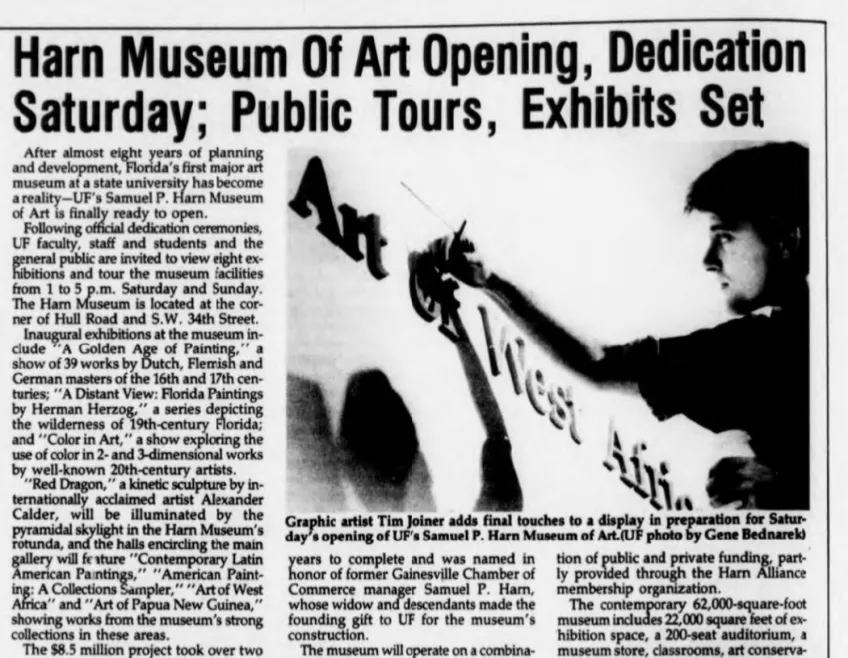
Click here to read the the full article.
1994: UF becomes a partner and the degree-granting institution of the award-winning New World School of the Arts (NWSA) in Miami.
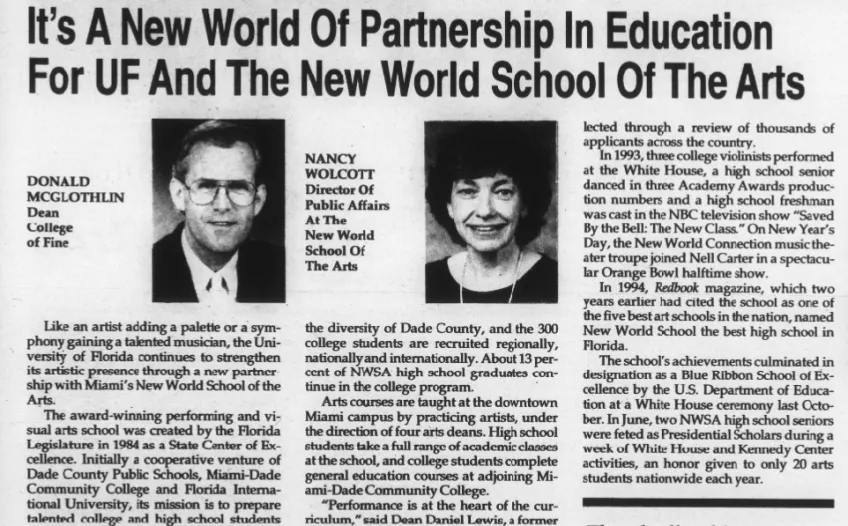
Click here to read the full article about the NWSA partnership.
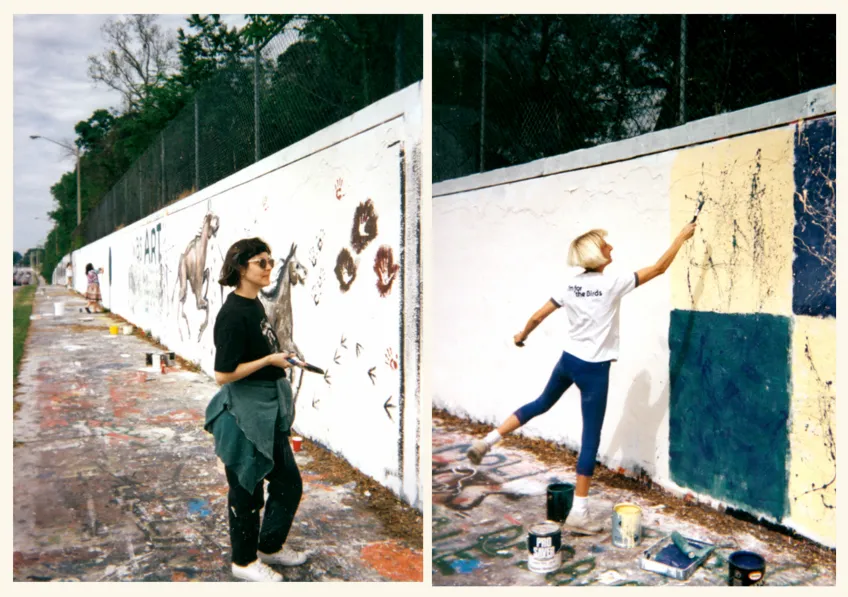
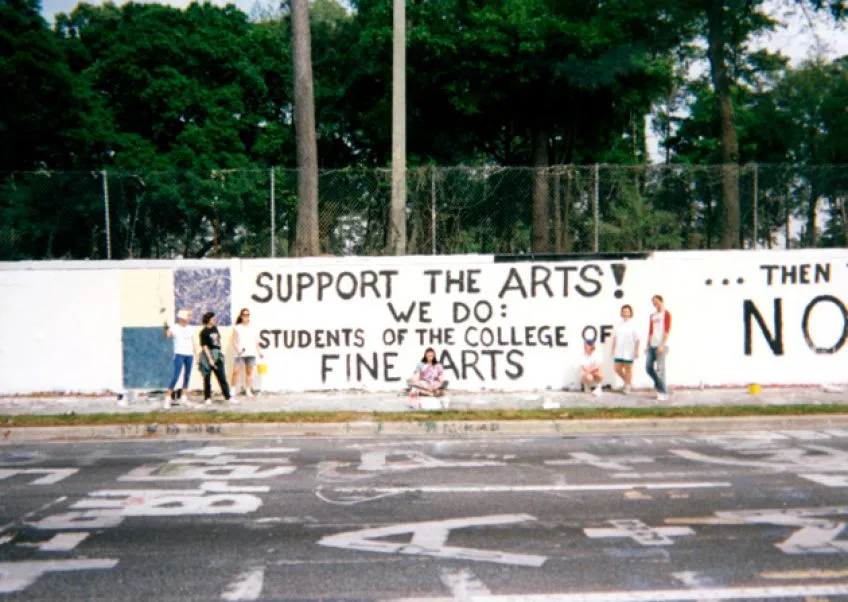
1995: College of Fine Arts celebrates 20th anniversary with “History of Art” mural on 34th Street Wall.
1995-1996: Dance in Medicine course launched.
The UF Dance in Medicine course laid the groundwork for the Center for Arts, Healthcare, Research and Education (CAHRE), which is known today as the Center for Arts in Medicine.
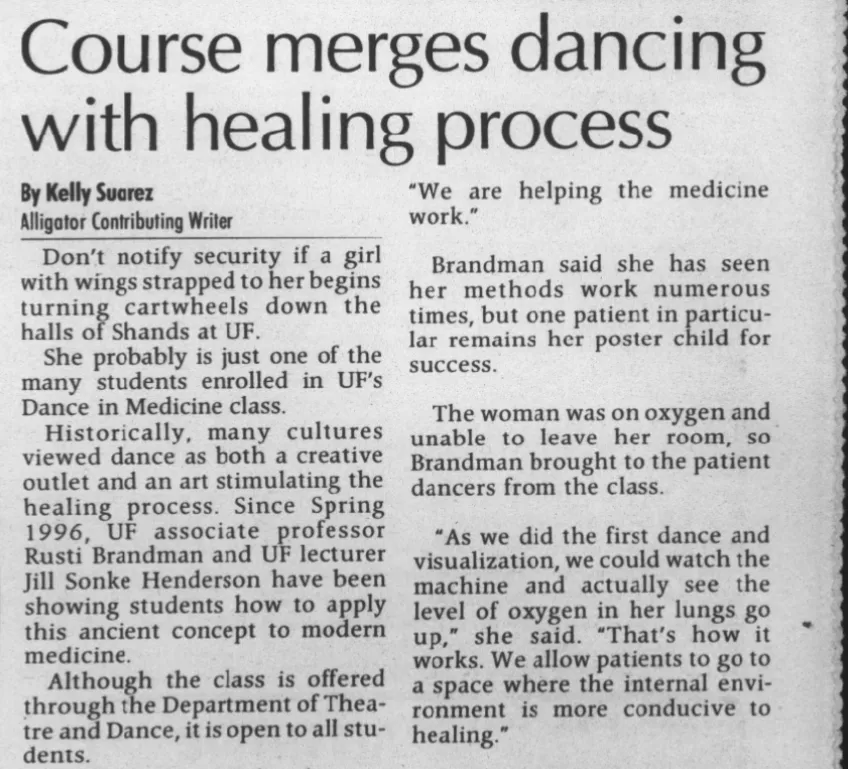
Click here to read the full article about Dance in Medicine.
1996: Center for World Arts established.

Click here to read the UF Explore article (Fall 1997) featuring the Center for World Arts.
1997: BFA in Dance created as a joint degree between NWSA and UF.
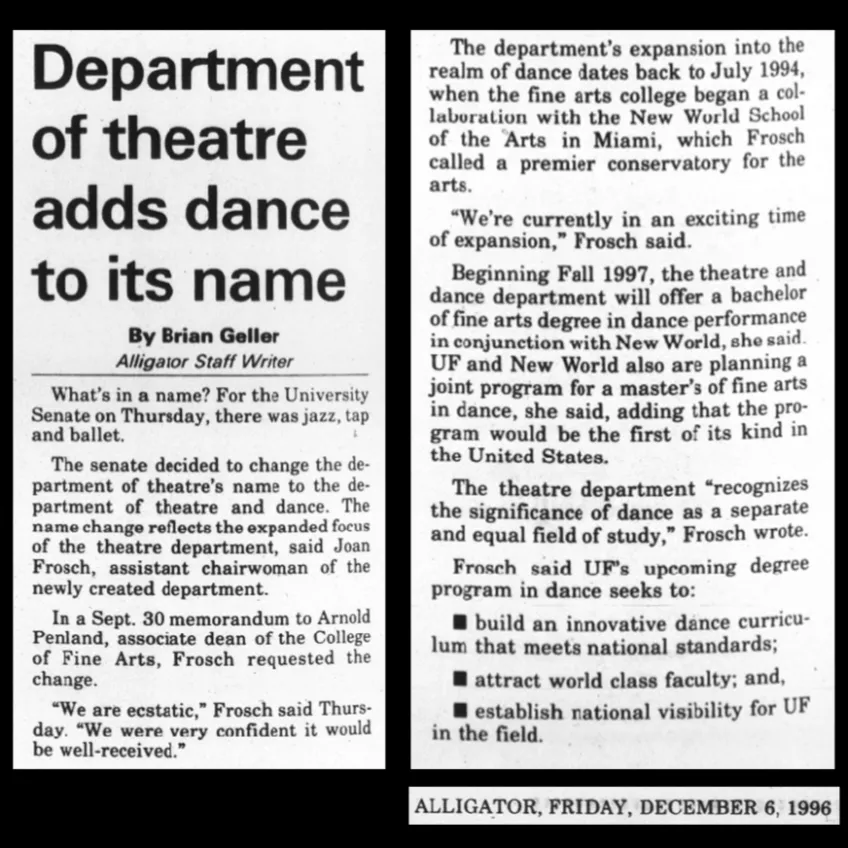
1999: Digital Arts and Sciences (DAS) program launches in Fall 1999 as a partnership between College of Engineering and College of Fine Arts.
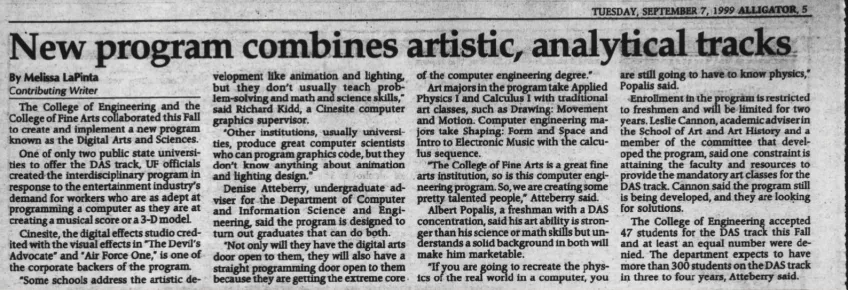
Click here for a zoomable version of the article.
1999: Center for Arts, Healthcare, Research and Education (CAHRE) founded.
CAHRE grew from the groundbreaking clinical work of the UF Health Shands Arts in Medicine program to serve as the academic, research and training component of the Arts in Medicine program. The center’s founding co-directors were Rusti Brandman, Ph.D., John Graham-Pole, M.D. and Jill Sonke, Ph.D.

2000 – 2010
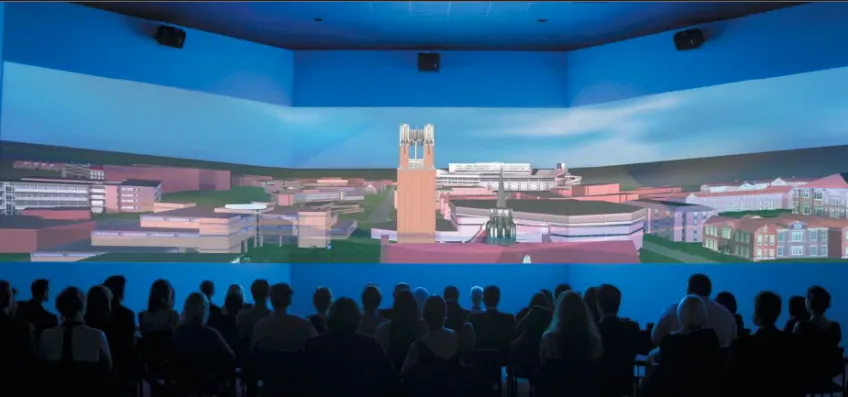
2001: Digital Worlds Institute founded as a research venture between the Herbert Wertheim College of Engineering, the College of Journalism and Communications and the College of Fine Arts.
2004: Nadine McGuire Theatre and Dance Pavilion opens.
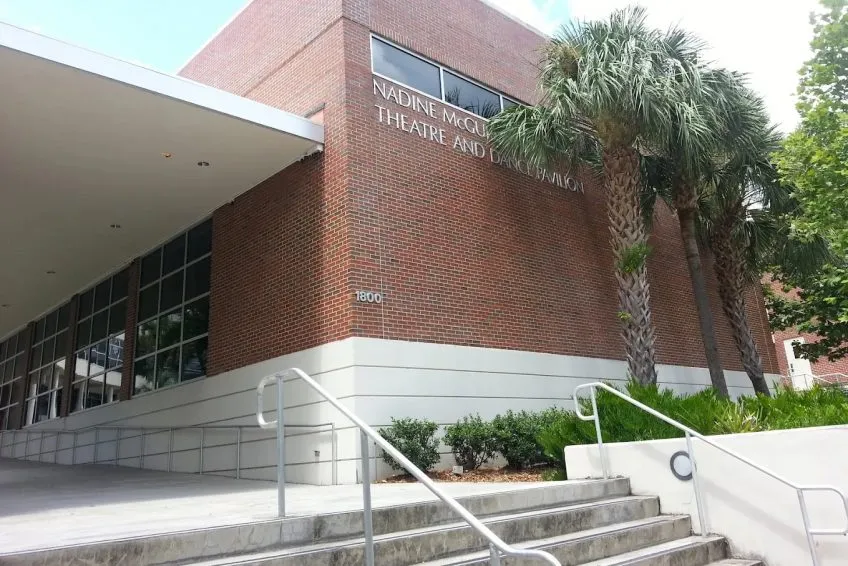
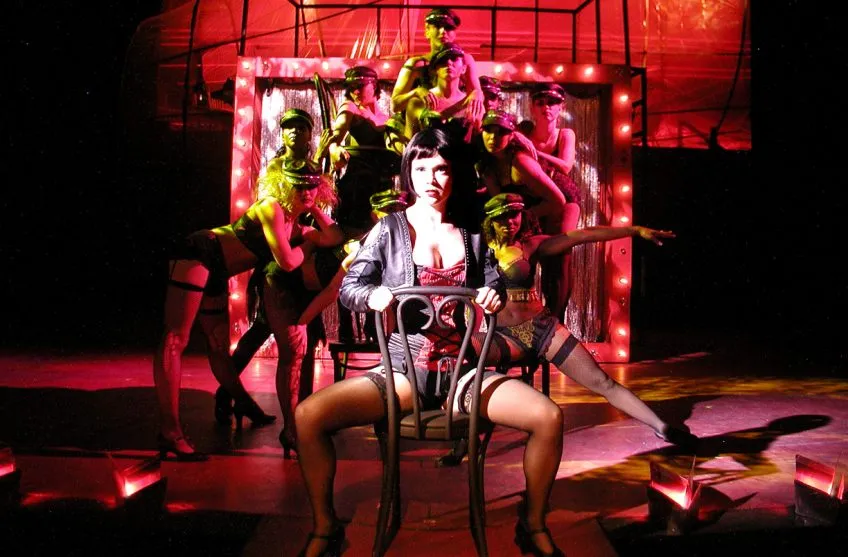
2004: Department of Theatre and Dance becomes the School of Theatre and Dance.
2008: Steinbrenner Band Hall is completed.
The 19,000 square-foot facility includes a 5,600 square-foot rehearsal space, a band library, instrument and uniform storage, administrative offices, a conference room, and two large lobby areas.

2010 – Present
2012: CAHRE becomes the Center for Arts in Medicine.
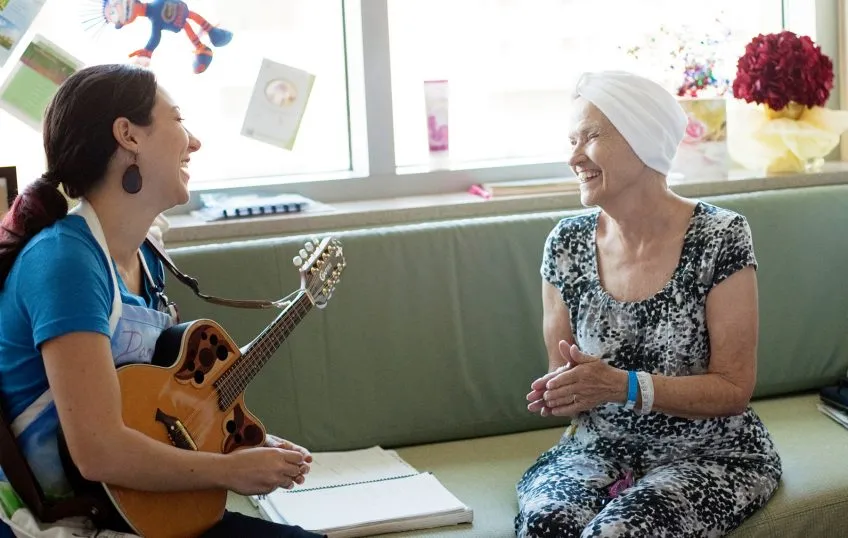
2014: College of Fine Arts changes its name to College of the Arts.
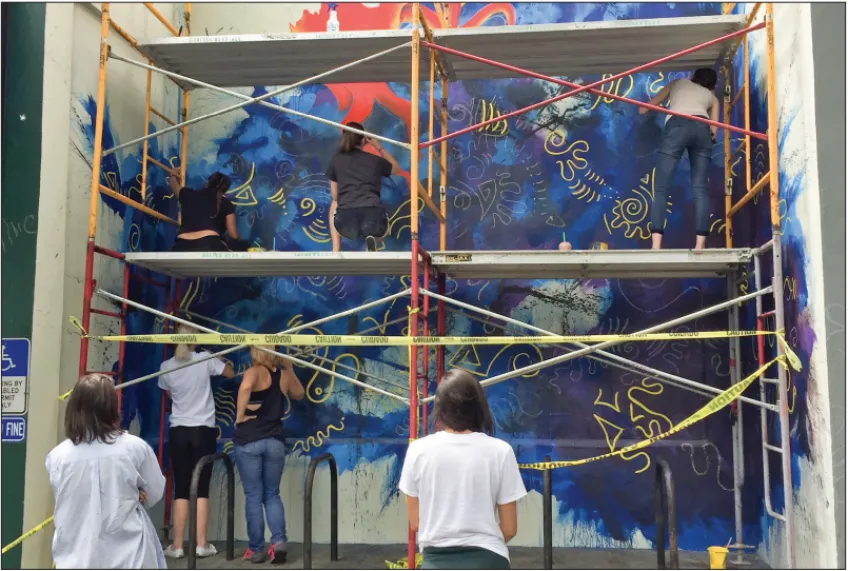
2018: Groundbreaking for new Gator Marching Band Practice Complex.

2020: The Center for Arts, Migration, and Entrepreneurship launched.
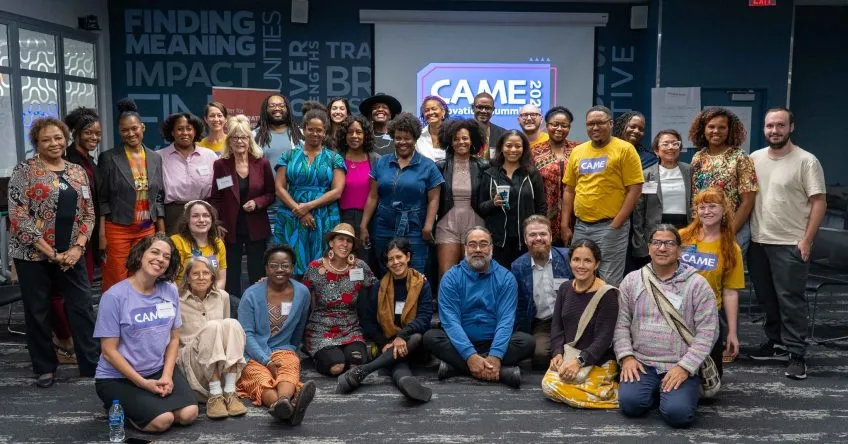
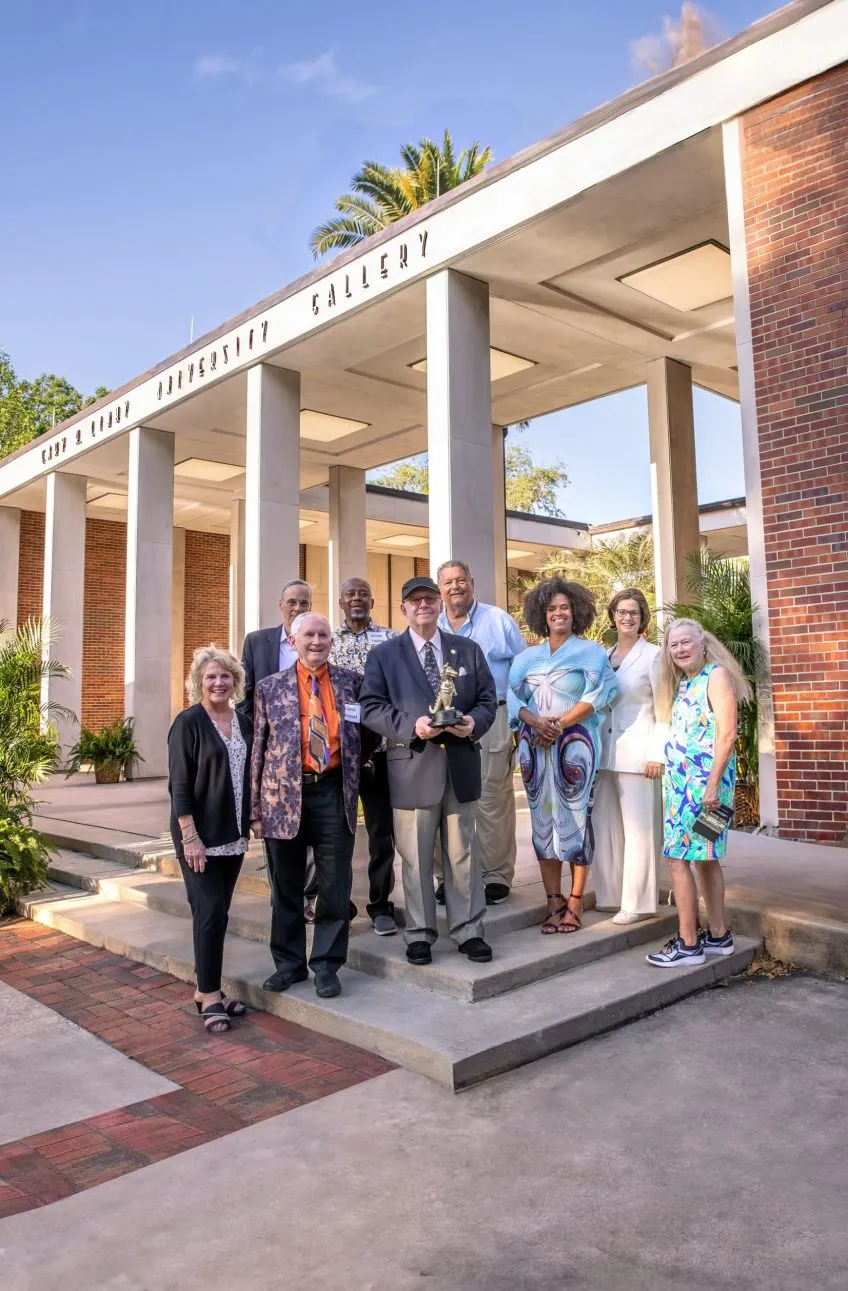
2021: University Gallery is renamed Gary R. Libby University Gallery after alumnus and philanthropist.
2023: Digital Words Institute integrated into the College of the Arts.

2025: College of the Arts celebrates 50th anniversary.
The College of the Arts celebrated this anniversary milestone with the launch of the COTA 50th Campaign for Creative Impact fund in Fall, 2025.

Celebrating 50 Years of COTA: Photo Slideshow
Take a trip down memory lane with the COTA 50th Anniversary photo slideshow featuring photos from across the decades that were not included in the timeline above.
Explore more COTA History:
For even more College of the Arts history, view the #UFCOTA50 hashtag on Instagram.