UF researchers use dance to explore lithium-ion battery science
Dance faculty Xan Burley and Alex Springer join forces with Herbert Wertheim College of Engineering Materials Science faculty Megan M. Butala to advance battery science in COTA Creative B-funded research and performance project, ‘How Batteries Move.’

What happens when you put a materials scientist in a room with contemporary dance artists? Alex Springer, MFA, and Xan Burley, MFA, associate professors in dance from the School of Theatre and Dance, and Megan M. Butala, Ph.D., assistant professor of Materials Science and Engineering, are working together to explore what fascinating discoveries emerge from studying energy movement in lithium-ion batteries through the lens of human movement and dance.
The conceit of the endeavor — titled How Batteries Move — is owed largely to a previous NSF-funded project, Choreographing Science, led by Dionne Champion, Ph.D., an assistant professor in the Center for Arts and Medicine (CAM). In Champion’s project, the trio were fellows exploring how to better convey scientific concepts through the art of dance to middle school-aged participants.
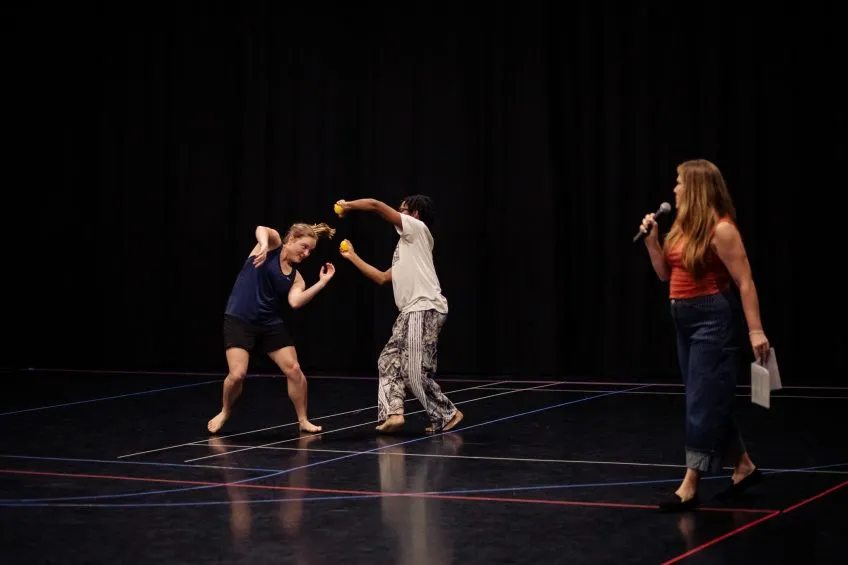
“There were multiple science concepts,” Butala explains. “As we were describing our science, Alex and Xan would move in interpretive ways that were already starting to embody the concepts.”
The effects observed from providing a choreographic aide as a vector for participants to interpret and understand abstract science were exceptional, says Butala, who notes that “a lot of the middle-schoolers who were participating understood the scientific concepts better than some people who had done undergrad research in my lab for a semester.”
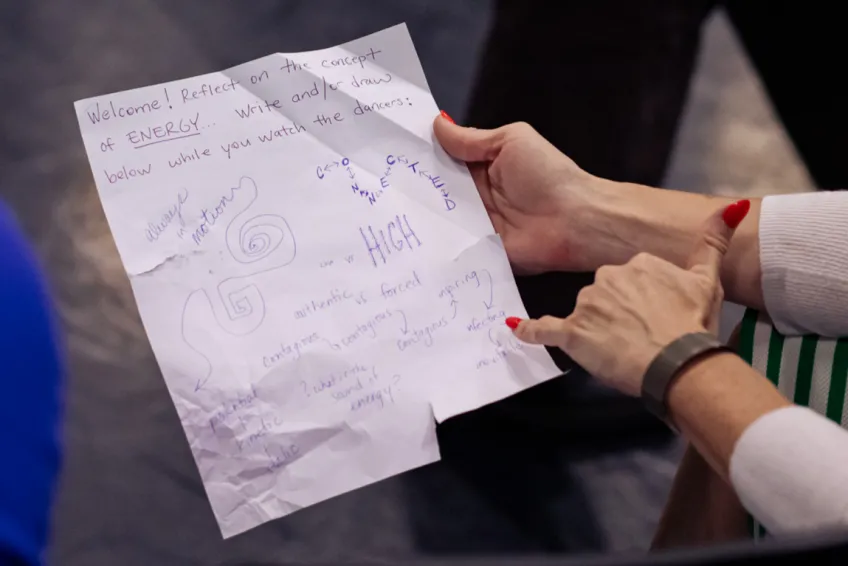
Dancers, researchers, citizen scientists join forces in Creative B ‘How Batteries Move’ summer project
As part of the College of the Arts’ 2026 Creative B Summer Program, Butala, Springer and Burley extended the previous collaboration, allowing for creative play and human physicality to take the lead and see what results from the shift in perspective.
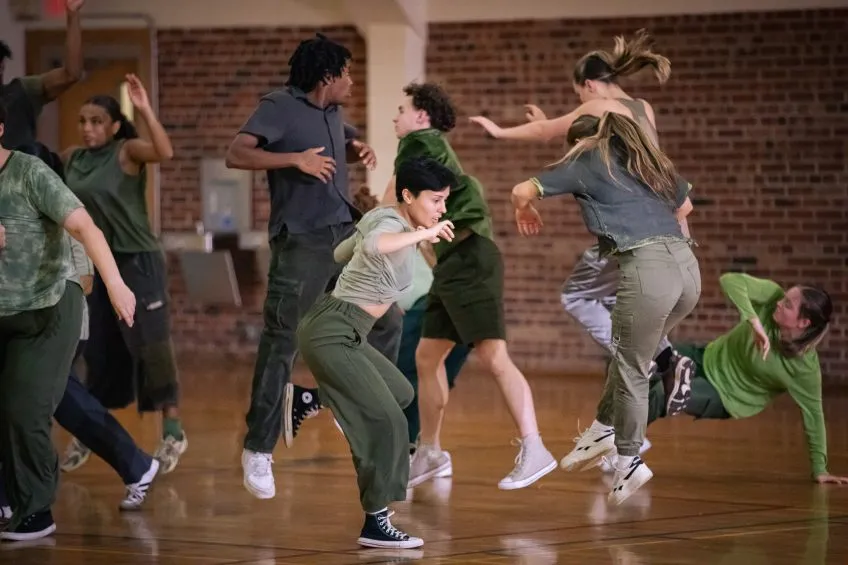
Their previous funding “allowed us to really explore and embody the science in an educational pathway,” Springer explains, “and now, we’ve been funded through the College of the Arts with a Creative B Catalyst Grant. And so, for this iteration of the project, we’re flipping it from science-forward to more of the art, abstraction and dance as the driving force to take that as inspiration and really let it unravel.”
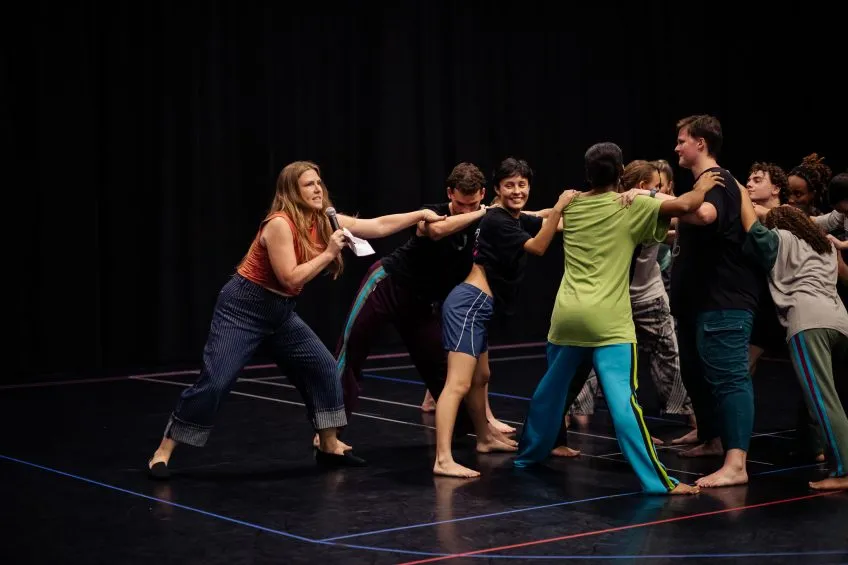
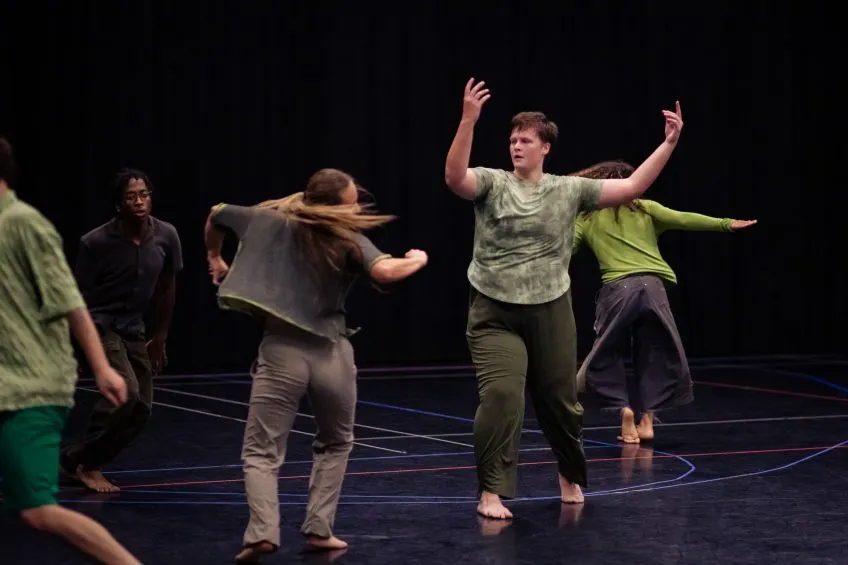
Bringing in community members and undergraduate students, Springer and Burley guided the creation of a live dance performance, a lecture-demonstration and a dance film with the goal of introducing their research to a broad audience ranging from local communities to international film festivals.
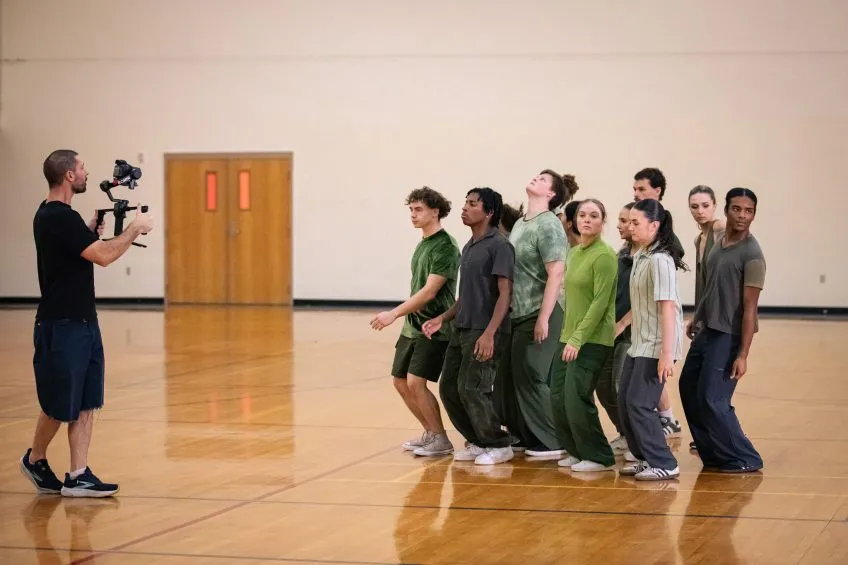
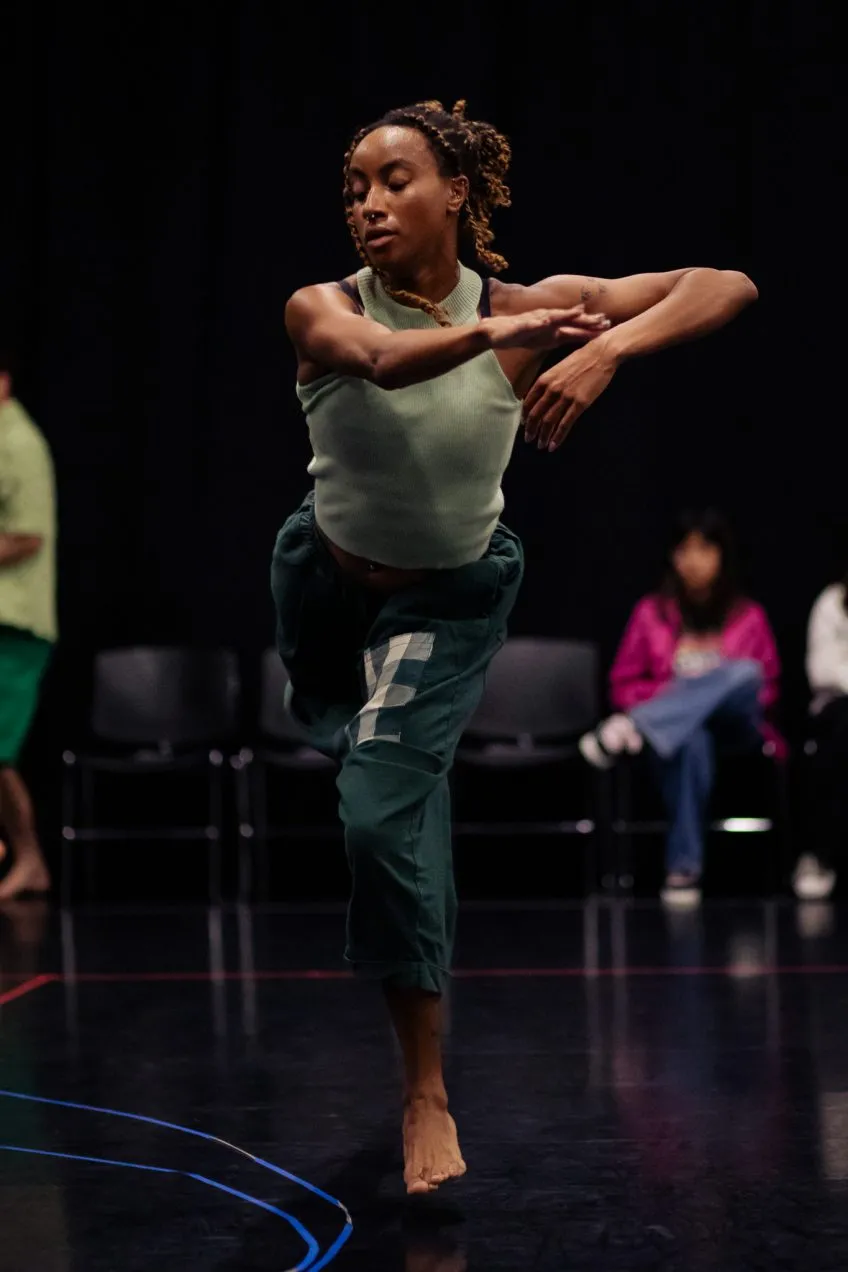
The film aims to spark conversations about possible avenues for body-to-battery connections, and how exploring scientific concepts through dance and creative play could advance understanding of energy and movement in humans, as well as the electricity they consume.
“I think it’s just rich with metaphor,” Burley says of the analogue. “That sort of translation from hard science to soft science through movement, or that hard science to something humanistic, is exciting for me.”
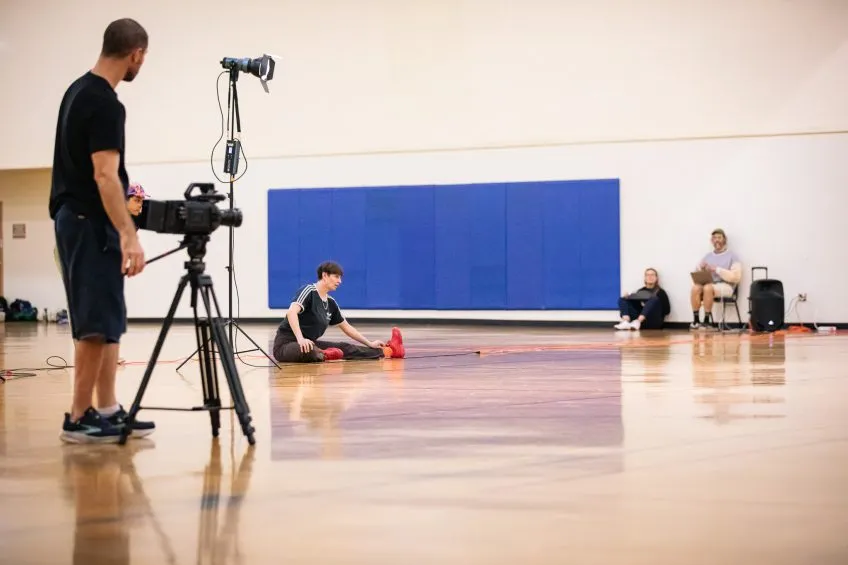
Burley imagines the Florida gym — the location where their dance product is filmed — as a container for the metaphor:
“A gym is a place where human exertion, physicality and performance are on display; where human energy is expended and recharged … In a way, this gym is the battery — a place that stores human energy and potential. I’m really interested and excited to explore how far we can push our bodies as we lose charge, in the same way a battery loses charge.”
She pauses briefly before adding, “I’m struck by how batteries, as they charge and discharge over and over, slowly degrade. It’s incremental and almost imperceptible, but they degrade over time. And for me, there’s an analog to what it means to be a human in the world, and life and death.”
Materials scientist and engineer, Butala, is intrigued by how dancers can offer a new lens through which to visualize and advance science related to energy storage in batteries and the longevity of the devices. Specifically: what insights can dance reveal about the mechanisms in the batteries that power our day-to-day existence and their life cycle?
“Batteries continue to have a place in culture where everyone’s interested in longer battery life,” Butala says, “in an electric vehicle, an electric scooter, an extra battery pack when you’re stuck at the airport — there’s an element of performance around technology, including batteries, where… people want to consume and perform.”
Interdisciplinary arts-STEM research super-charges new ways of conceptualizing ‘energy’ down to the atomic level
The conversation continues, but another shift in performance is noted — my own, from an interviewer to that of an observer — as Springer reveals a new observation. The energy in the room comes alight with a spirited back-and-forth as Springer, Burley and Butala bounce ideas around in a dance that encourages me to step away from my pre-prepared questions and simply listen.
“The one thing that really has struck me in our collaboration at large is the word ‘energy,’” Springer muses.
“It’s used in both our disciplines in different ways, but I think at the end of the day we’re all like, ‘what is energy?’ That, as a foundational question, is really interesting. What is energy in the body? What is energy in a dance? How is energy moving or what is it making happen in the battery; in the circuit? The word ‘energy’ gets used a lot, but maybe not understood as deeply.”
Burley chimes in on her colleague’s train of thought:
“I think another key term is ‘movement.’ Megan’s research is trying to identify how to structure a battery so that lithium ions move effectively. So, it makes sense to me that we use dance as a modality to deepen the understanding of this concept. Dance is the art of movement, and what we do as researchers in dance is move to understand. It seems sort of silly or redundant to say, but the fact that movement is so integral to batteries, and to what we do as dancers, feels important.”
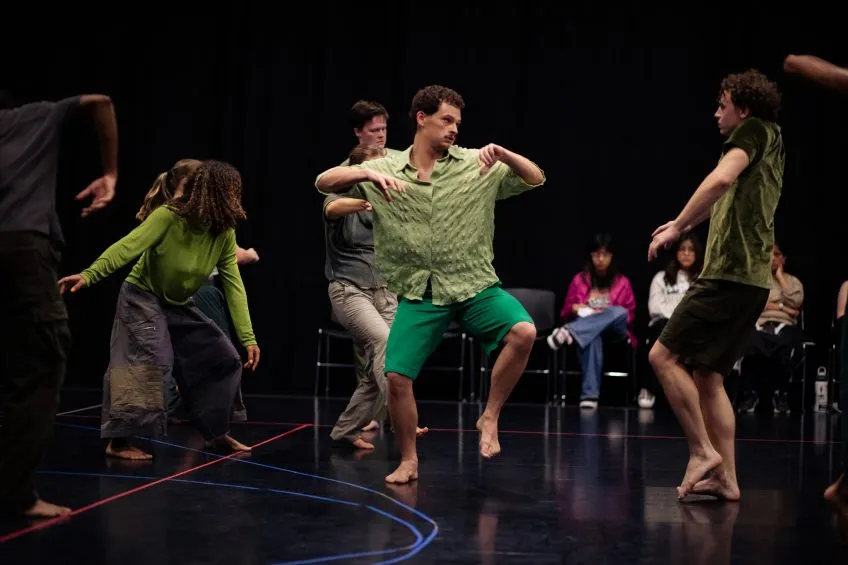
Butala builds on that concept:
“What sometimes has surprised people in this workshop is that if I’m looking at a solid that’s sitting still, all the atoms in it are moving. They’re moving all the time — not a lot, and they’re not transporting — but they’re all moving. And then when you plug your battery into the wall to charge it, or you use it to power your device, then we do have transport of ions and electrons — and they’re not just floating as they would in a gas. They’re interacting with everything that they pass. In dance, there are so many ways of representing and interacting with other bodies in the system. There’s this spatial, relational energy relationship between the bodies in a physical space as they move.”
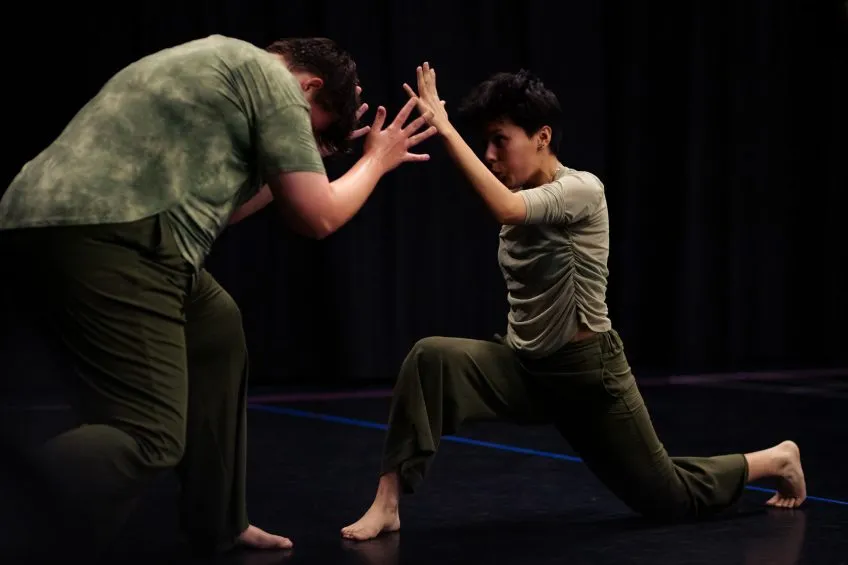
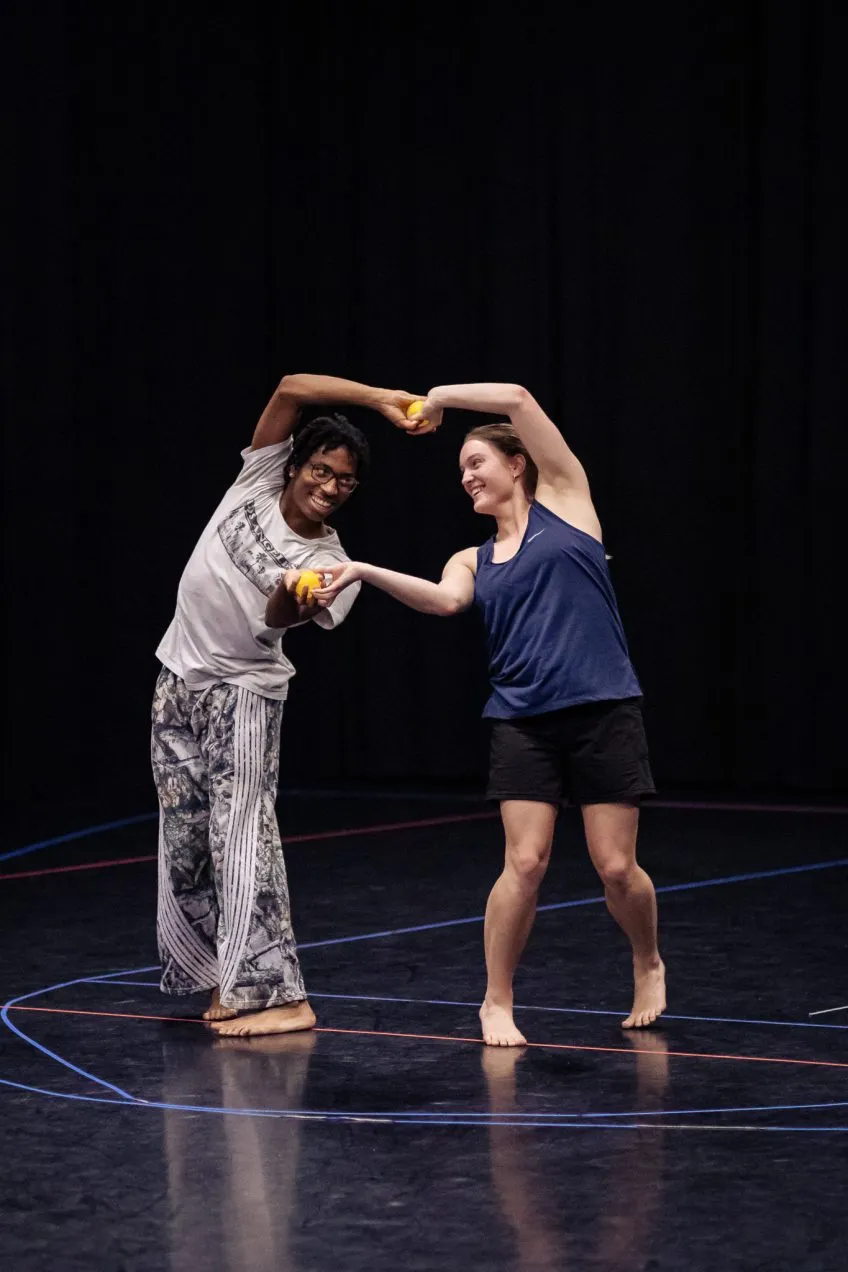
Burley and Springer are attentive as Butala continues:
“The models that we use to visualize what we’ve made — such as how the atoms are arranged or determining the path that a lithium ion would take when it’s moving through a battery — are computationally expensive. You can simulate it. You can calculate it. You can say with this percent certainty, here’s the path that it would follow, and here’s the cost — the energetic cost — of it hopping over or through barriers, and so we can build a lot of understanding of the different courses that the moving ion is experiencing that impact the path that it takes.”
“So much of what Megan does is about space, as well,” Springer adds, “and the relationship between the atoms.”
“That’s what choreography is, too,” Burley notes. “Relationship and space between atoms, really, if you think about it.”
Springer nods. “Yeah, there’s such a symmetry with how bodies are in space and how the battery is constructed inside.”
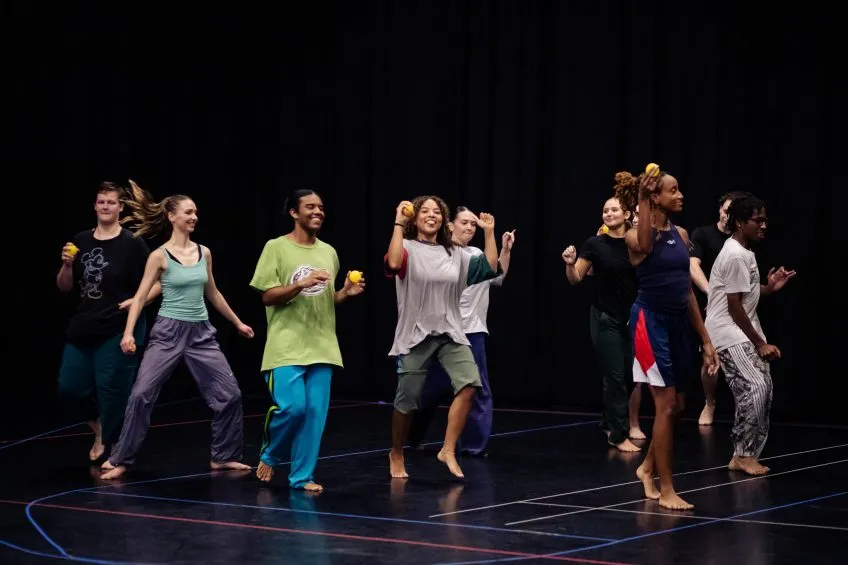
Creative B grant funding set the stage for more from ‘How Batteries Move’ collaborators
After their dance film is complete, the trio is “hoping that it will be screened far and wide,” according to Burley. A preview of the filmmaking process was available to view as part of the Creative B Symposium and Research Mixer that occurred on August 28 at Emerson Alumni Hall.
Butala looks forward to communicating the results of the collaboration alongside her scientific products. She also hopes to share more of the genesis through which she, Springer and Burley have become recurring collaborators and how they navigate building a strong interdisciplinary connection with their unique and varying specializations.
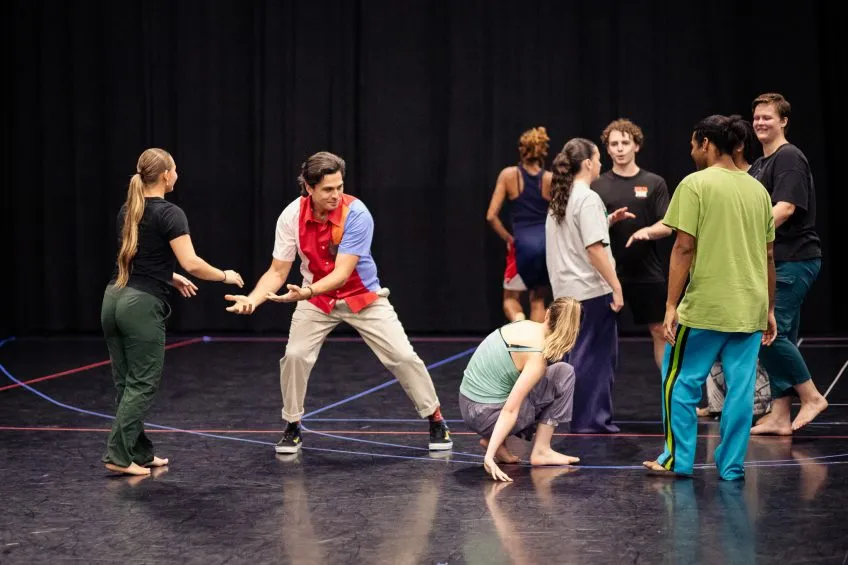
“I really appreciate that I feel a lot of respect in my expertise from Alex and Xan,” Butala says with a gesture to her colleagues, “and I feel a lot of respect for their expertise. And this allows us to commit the time that it takes to find the good nuggets in our research.”
Springer and Burley nod in affirmation.
“I think this work for Creative B will synthesize a different kind of output and allow us to tangent away from what other support has been moving us toward in a really exciting way, and I feel like that will also spiral back into science-driven work,” Springer adds.
“I’m excited about sharing the interdisciplinary methodology that we’re working with; I’m excited about sharing the embodied learning impacts that it’s having on educators. There’s a lot of possibility for how this continues to show up, and I definitely think it will be on campus again in some capacity. We’ve been talking about a lot of ideas and each iteration opens more pathways, so I think there’s a lot possible with where this project can go.”
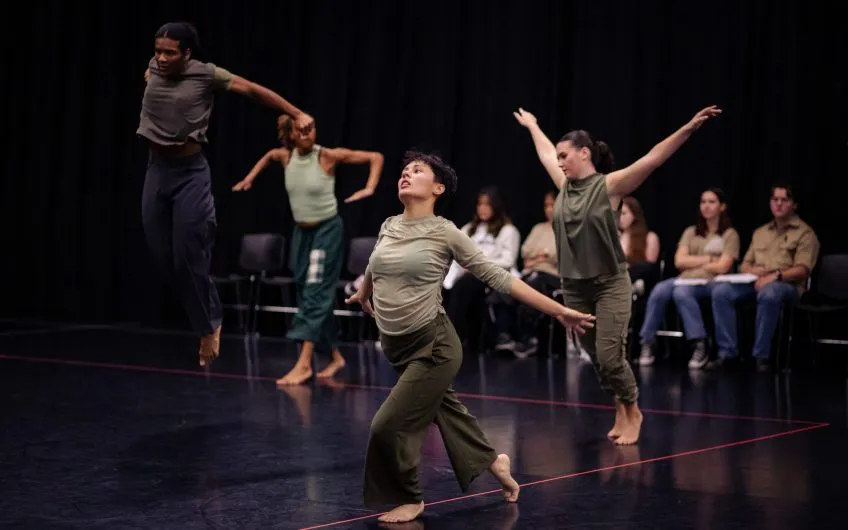
Watch: How Batteries Move film preview
FILM CREDITS:
Co-Directors: Xan Burley, Dr. Megan Butala, and Alex Springer
Choreography: Xan Burley and Alex Springer in collaboration with the performers
Performance: Emma Brace, Kaylee Cravey, Austin Hudnall, Jacob Jimenez, Megan Keim, Colin Lawrence, Halle Peterson, Lauren Pognon, Em Pucuhuaranga, Olivia Raulerson, Lola Sennett, and Caleb Urbistondo
Sound Design: will owen
Cinematography: Five Seven Film